“NOTHING IN WAR IS MORE IMPORTANT THAN UNITY OF COMMAND. THUS, WHEN WAR IS WAGED AGAINST A SINGLE POWER THERE MUST BE ONE ARM, ACTING ON ONE LINE AND LED BY ONE CHIEF”
In today’s era of modernization, globalization and militarization, when each and every country in the world is involved in different war like situation and there are evident and possible war pockets in every continent, it is really important for country like India to update its war strategy and the first step in this way is none other than Joint 2.0 or in the words of our Chief of Defense Staff (CDS) it is “Joint warship: the way ahead”.
In this realm, the most spoken weapon is HYPERSONIC WEAPON.
INTRODUCTION
Hypersonic weapons are new age weapons, ever developed or nearly developed countries have them, they are the new player in the warfront game. This weapon glides at a whooping speed of Mach 5 and is flexible to change their trajectory in between. Differing from the traditional missiles they not only change their direction but also can change their target in between the flight.And that’s what makes it difficult to intercept for any RADAR or missile. They come up with the unique power of locking a target and destroying it with precision and at most accuracy. Existing in the war culture from the 20th century, these weapons are not new but the integration of modern science make them weapons of the new generation. With new age technology coming up these weapons are day by day gaining more recognition and importance in the warfare department. Researchers are increasing their area to innovate with these weapons by exploring new launching systems that can sustain in today’s dynamic environment. In today’s generation any warfield is absolutely void without these stealthy weapons.Hypersonic weapons broadly constitute of three types: -
HGV
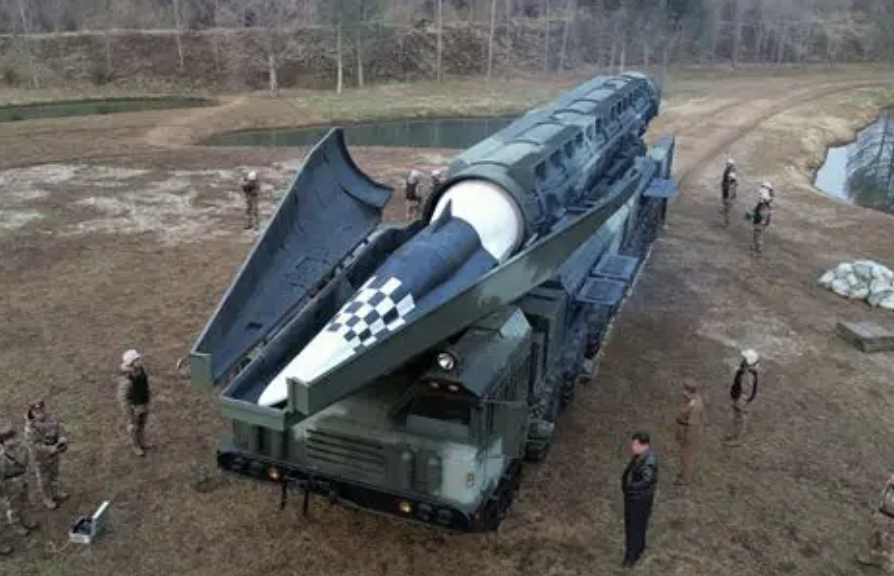
Also known as hypersonic glide vehicles,its usage is as dynamic as its name, a rocket launches it into the atmosphere then it locks the target and using its special gliding mechanism, it slowly glides towards the target by adjusting its direction along the way to avoid any obstruction or object in between. It is a modern-day vehicle carrying ballistic missiles and this can be used to ultimately change their parabolic trajectories. What made this weapon extraordinary is its rapidly evolving and agile capacity; these vehicles do have such capacity to glide and avoid objects at the same time.
HYPERSONIC CRUISE MISSILE
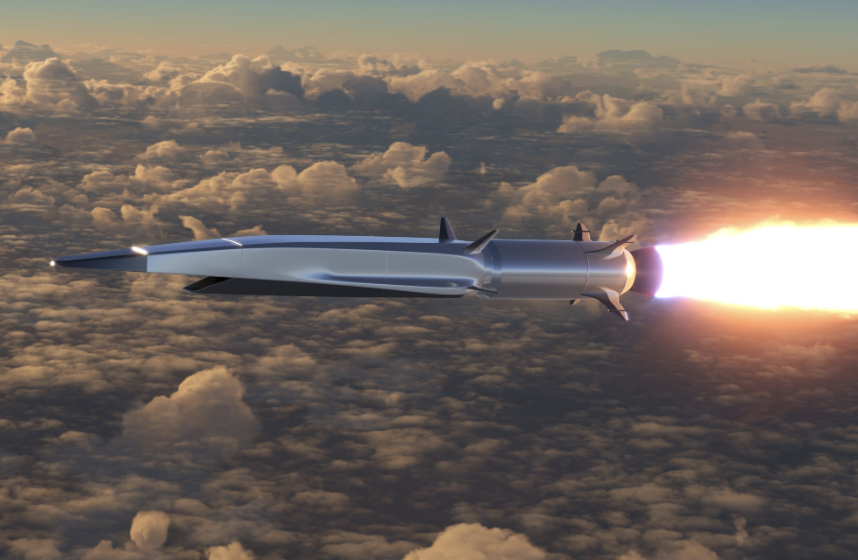
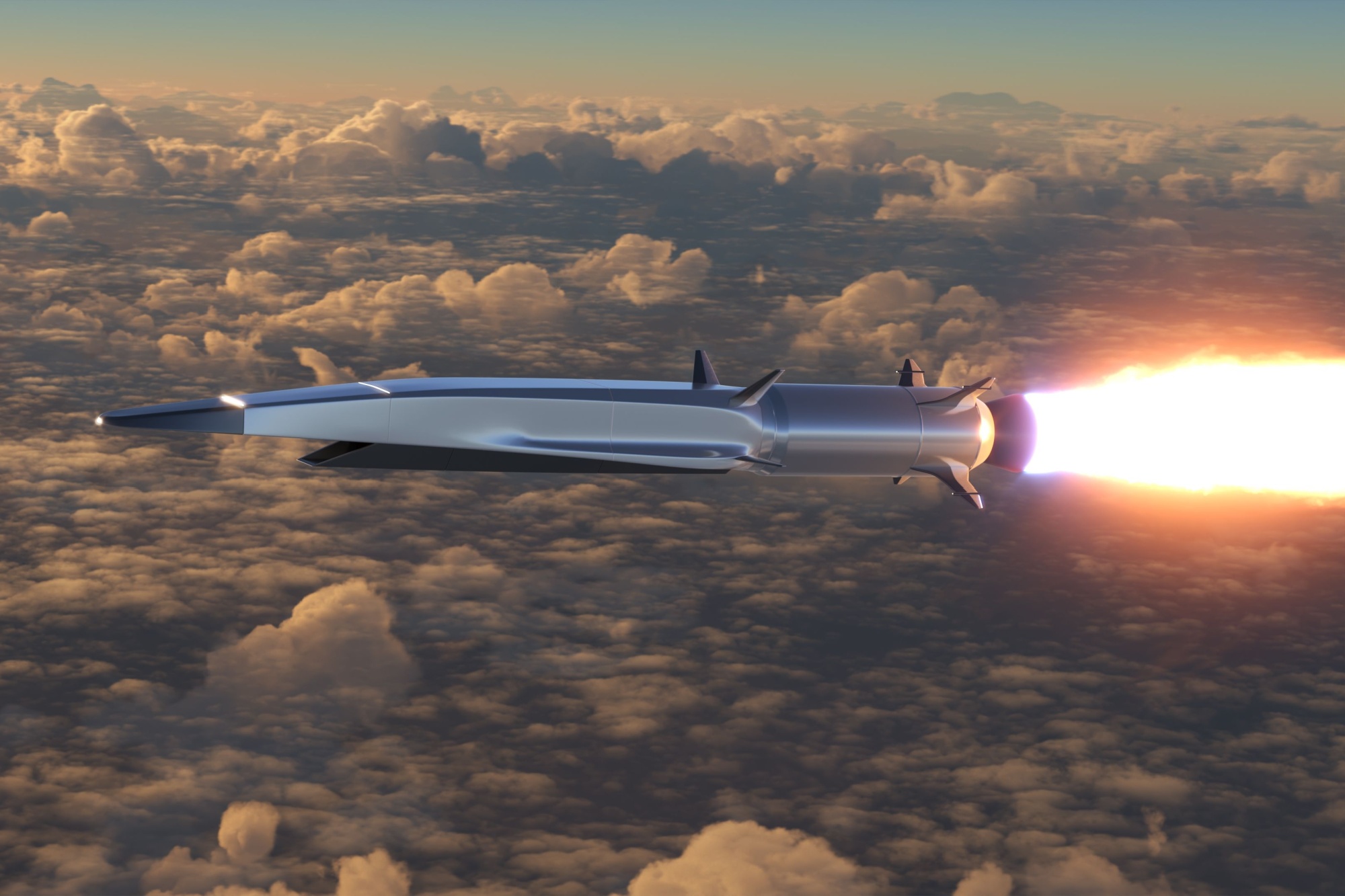
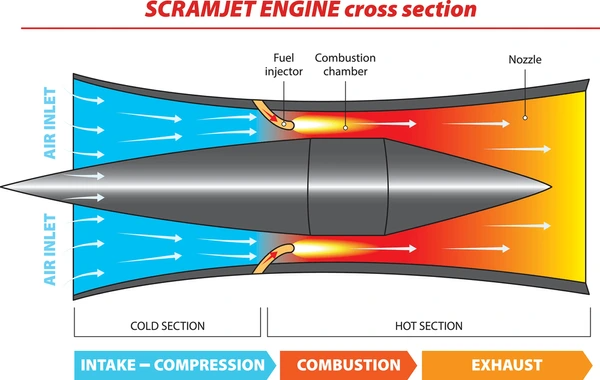
They have specialized, lightweight, aerodynamic engines which ultimately help them to reach the maximum speed. One of its kind Missile, or it can be referred as a jet powered missile, they do need a strong initiation using a scramjet engine to maintain its everlasting speed of Mach 5 in fact with a strong built engine even achieving greater than mach 5 is also possible. One of the greatest boons of using Hypersonic cruise missiles is that they do not need early onset from rockets like HGV to get started, they can go on using their own jet specialised engines.
HYPERSONIC AIRCRAFTS
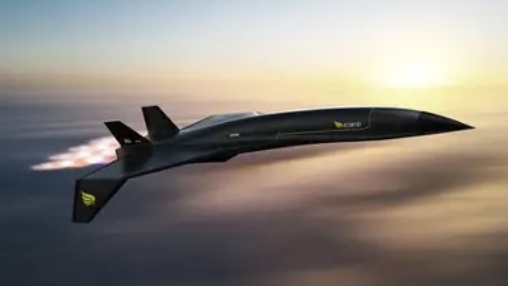
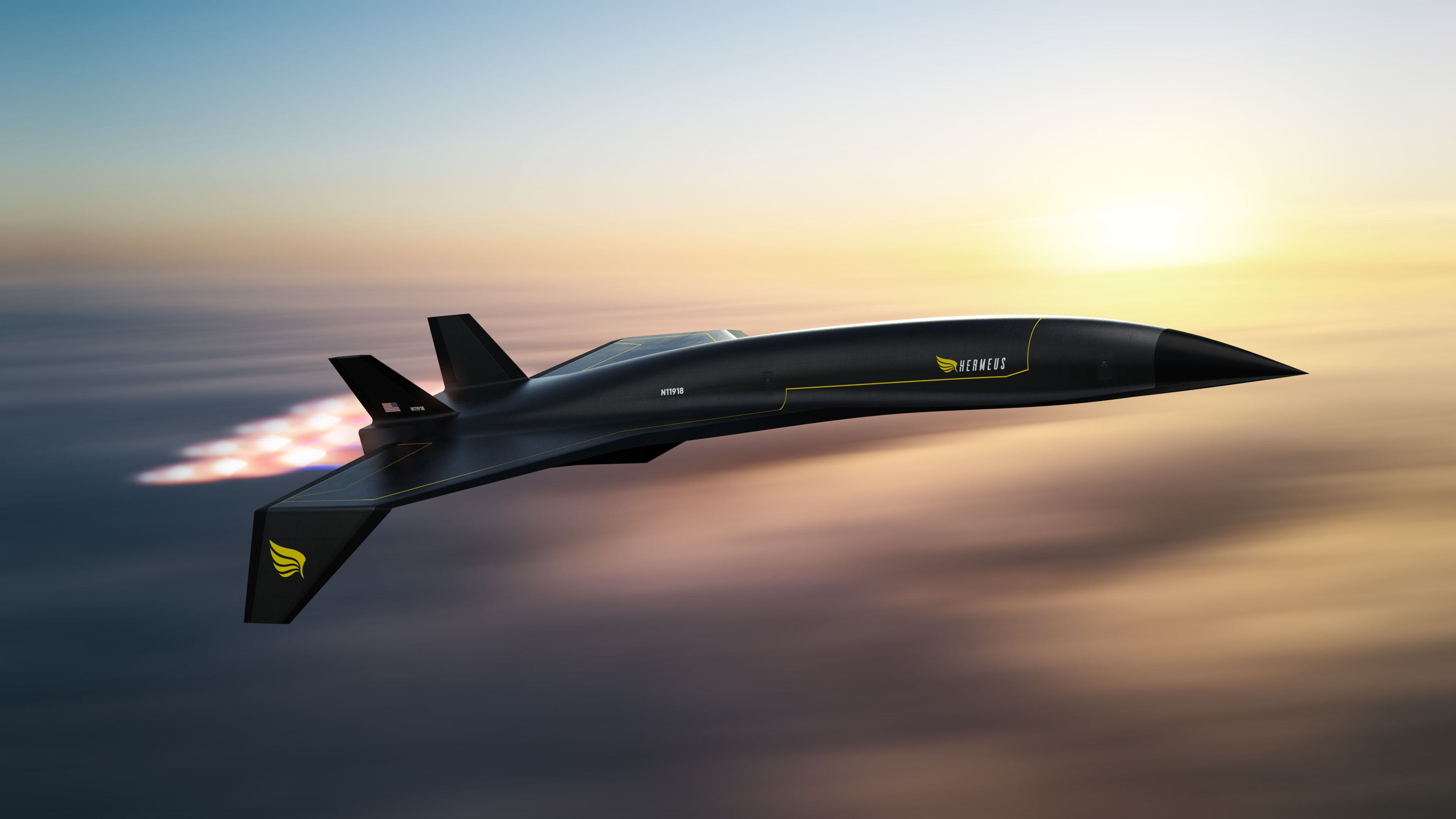
Hypersonic Aircrafts are just another word for futuristic aircrafts. They have immense potential and can achieve a whooping speed of greater than mach 5 or in simple words approx 5 times the speed of sound. Their unique aerodynamics comes from their Streamlined body, which is specially designed for heavy military usage and future space and civilian travel. They can travel at such a speed that it is almost impossible to intercept or target them. This extraordinary power comes from its typically very high heat resistant and agile advanced engines. They are the weapons of tomorrow and will definitely leave their mark in the 1st century.
HISTORY OF THESE MULTI-USAGE WEAPONS
In today’s era, any ballistic missile covering the range more than 400 km operates none other than but hypersonic speeds, but these missiles and weapons were long discussed in the military world since the use of V2 rockets in World War 2.
V2 rockets are one of the most powerful rockets used in WW2 and they were developed in Nazi Germany, they have special mechanism and use liquid oxygen and propellants to produce a force of 56,000 pounds which ultimately lead the rocket to attain a whooping speed of 34000 mph and reaching up to 50-60 miles with maximum range of 220 miles.
However, the existence and usage of hypersonic is not limited to this, there is much more to the story.
During 1959 to 1968, the X- 15 research aircraft led to the flight of at least 199 flights and they attained a speed of 2 km/s, paving the way for the future research in the field of hypersonic aerodynamics.
Then during 1966 to 1975 APOLLO CAPSULE made the reentry in the atmosphere with the speed of 11km/s which again prove the fact and pave the way for further details regarding how with heavy load both aerodynamism and hypersonic speed is achieved without any time lag.
Now changing time and science domain, both are helping the new missiles to attain the hypersonic speed more easily, many of today’s interceptor missiles fly in this range only at 2 to 5 m/s indicating how hypersonic have evolved with the passage of time from the 1960s to 2020s.
USAGE IN INDIAN JOINT WARFARE TECHNIQUE
The development and thought of the use of hypersonic missiles dated back to 2007 when Dr. APJ Abdul Kalam thought of having Indianized hypersonic missiles in the next 15 years. And with this India got its first ever hypersonic missile Brahmos.
BRAHMOS in itself is the first supersonic cruise missile. This hypersonic missile paved a way for India in its joint warfare technique by bridging the gap and unifying all the three forces of India as its first version has been used by the Indian Navy from 2005. Secondly, the Indian Army has also been using many BRAHMOS regiments since 2007 and thirdly our Airforce has inducted this missile armed with Sukhoi 20mkl frontline fighter aircraft and that’s how a single hypersonic missile helps in integration of all the three Indian forces.
Brahmos is specifically known for its capability to be deployed from any means. This unmanned self-propelled vehicle is named after the rivers Brahmaputra and Moskva and the main difference between any other cruise missile is that cruise missiles use turbofan and turbojet engines while hypersonic missiles work on ramjet and scramjet engines. On top of this its peak at aerodynamism with the ability to be used in joint warfighting and low flight path makes it quite difficult for radar systems to detect its trajectory or incoming. Secondly, it can combine both high and low altitude and flying at high altitude can solve two problems: first it can save a lot of fuel and second by this the range of the missile can be extended quite efficiently.
UPCOMING CHALLENGES OF HYPERSONIC WEAPONS IN JOINT WARFARE STRATEGY
Without joint experimentation or joint warfare strategy use of hypersonic advanced methods is just like firing a bullet in a dark room as joint forces are required in order to reduce the risk when acquiring new military designs, capabilities, tactics or even mere procedures. This shows how developmental or researching services are totally aligned with the soldiers, in fact with the defense team.
Firstly, it requires lots of time and energy in acquiring hypersonic science, once achieved it would be of greater help but many countries are still processing to achieve that perfect speed with absolutely top-notch range.
Secondly, it requires a lot of knowledge and it is quite complicated to steer a hypersonic missile, they are great for fixed targets but cannot predict accurately for moving targets. With moving targets their accuracy automatically reduces.
Thirdly, various studies are still going on to understand the perfect material for that aerodynamism needed for the perfect hypersonic speed as it is difficult to rely on my material as another material cannot extend the laminar – turbulent transition zone.
.As per the solutions these problems can be solved with management and proper guidance in case of joint warfighting.The lack of understanding to these dynamic tools can be absolutely avoided by regular joint exercises, integration of these weapons into military domain, this solution has been adopted by the United States Of America with the name of JADC2 that is joint all domain command and control which ultimately connects all the three forces with one system and thereby improving coordination in hypersonic warfare. Another challenge with these missiles is its long development time and difficulty of accuracy in hitting targets, the only solution for this is developmental and testing gap, countries like China have spent years of continuous testing of its HGV in order to increase its accuracy. With increasing tension in different pockets of the world and the ongoing tensions between countries whether it is Russia- Ukraine war, Israel-Iran or the strife between China and Taiwan has made the situation complicated for India and the region. India has the potential for both joint mechanism and researching in the direction of new age hypersonic weapons and proper timely research. Only if it is equipped with proper resources and intelligence then it can achieve success. Upcoming challenges from China and its ongoing test in the field of engaging new technology is not only creating new problems for India and the entire Indian ocean region but also countries like the US are also preparing itself for the unprecedented challenge in the time ahead. Not only China’s tests but also North Korea's claims of testing hypersonic nuclear missiles has taken the region for a toll. And India has given its answer by testing a miracle on 16 November 2024, at APJ ABDUL KALAM ISLAND. Another breakthrough testing was the testing done on 9 may 2026 in which DRDO tested one of the core foundations of hypersonic missiles – the SCRAMJET COMBUSTER (one of its kind gave India a boost in its self- reliance). Thus, Vishva guru to state a new definition of research and development and to master the art of joint warfighting as a new age tactical mechanism.

DRDO and ISRO are two wings which have helped in India’s research and development department from time to time. Along with this the idea of joint theatre command which was long pending will further lay the basic foundation for the next generation joint warfighting. This will single handedly separate the operational functions of the forces with the administrative purposes and further linked it with our two wings of DRDO and ISRO. And in this way more focus will be given to the operational command. This will further help the country to move from traditional single domain to multi domain functionality and finally lead to the digitization of the war space and fusion of both AI centric and cyber space centric domain in the research field.
“Whether World wars or peace, whenever the need arises the world has seen the victory of braves and their efforts towards peace”
REFERENCES
Wikipedia contributors. (2024a, April 30). Hypersonic weapon. Wikipedia.https://en.wikipedia.org/wiki/Hypersonic_weapon
Seldin, J. (2022, March 23). What are hypersonic weapons and who has them? Voice of America.https://www.voanews.com/a/what-are-hypersonic-weapons-and-who-has-them-/6492459.html
Bommakanti, K. & Observer Research Foundation. (2020). China’s cruise missile capabilities: Implications for the Indian Army and Air Force. In ORF Issue Brief: Vol. No. 427.https://www.orfonline.org/wp-content/uploads/2020/12/ORF_IssueBrief_427_ChinaCruiseMissiles.pdf
Karako, T., & Dahlgren, M. (2022). Complex air defence: Countering the hypersonic missile threat.https://www.csis.org/analysis/complex-air-defense-countering-hypersonic-missile-threat
Wikipedia contributors. (2024a, March 25). DF-41. Wikipedia.https://en.wikipedia.org/wiki/DF-41
DRDO carries out successful flight-trial of India’s first long-range hypersonic missile off the Odisha coast. (n.d.). https://www.pib.gov.in/PressReleasePage.aspx?PRID=2073994®=48&lang=2
Negi, R. (2026, May 9). India Crosses 20-Minute Mark in Hypersonic Race: DRDO’s Scramjet Engine Burns for Over 1,200 Seconds in Landmark Test. DefenceXP - Indian Defence Network. https://www.defencexp.com/india-crosses-20-minute-mark-in-hypersonic-race/
IMAGES
https://media.defense.gov/2024/Jun/28/2003494369/1280/1280/0/240628-D-D0439-101.JPG
https://tse3.mm.bing.net/th/id/OIP.cpQKntO3FjVAbgj_HmSEtwHaE4?r=0&rs=1&pid=ImgDetMain&o=7&rm=3
https://www.aerotime.aero/images/Hypersonic-cruise-missile-render.jpg
https://eureka.patsnap.com/blog/wp-content/uploads/2025/03/9-13.png