
Middle East in Crisis: Why India Pays the Price
The Middle East may be thousands of kilometers away, but every major crisis here lands on India's doorstep. When missiles fly over the Middle East, New Delhi worries about something beyond diplomacy. It worries about a surge in oil prices, safety of nearly nine million Indians in the Gulf, uncertainty around shipping lanes, inflation threatening households, and billion-dollar connectivity projects hanging in the balance. For India, the Middle East is not a distant conflict. It is a domestic, economic and strategic concern.This might be one of the greatest changes that have occurred in Indian foreign policy in the past twenty years. The boundaries between foreign policy and domestic governance have started blurring.
The Myth Of A “Distant War”:The Illusion Of Distance
Geography is misleading . Geopolitics isn't. Although India is not located in the Middle
East,sitting over almost 3,000 kilometers away,yet, its economy, energy security, and strategic ambitions are deeply connected to the region. For decades, Indians have viewed conflicts in the Middle East as foreign affairs. Tragic but geographically remote. The wars in Iraq, Yemen, Syria, or the recent tensions in Israel, Gaza, may seem thousands of kilometers away. Yet, in an interconnected global economy, geography has become a poor measure of relevance.
Distance does not shield countries from consequences of conflict. And India is among the countries most affected by instability in the region.
Crude Reality:The Barrel That Can Shake India's Economy
Unlike many countries, India is deeply intertwined with West Asia. It imports nearly 89% of its crude oil, nearly half its natural gas requirement, and 40% of its energy. Disruption in the Gulf can push up global oil prices, increasing India's import bill and domestic inflation. Tensions witnessed recently in the Middle East region have demonstrated the ability of disturbances in the Gulf to push up international oil prices, resulting in increased costs of imports for India, which in turn contributes to inflationary pressures in the country. It has been observed that a change of 10% in international crude prices is likely to cause around 20-basis points of change in the inflation rate in India, and this may increase if the depreciated value of the currency is also taken into account.The main challenge is not limited to high oil prices but includes volatility as well. Businesses can adapt to higher costs of energy, but sudden changes and volatility make it much harder for them to plan investments and manage inflation.
Where India's Economy Sets Sail :The Four Chokepoints That Matter
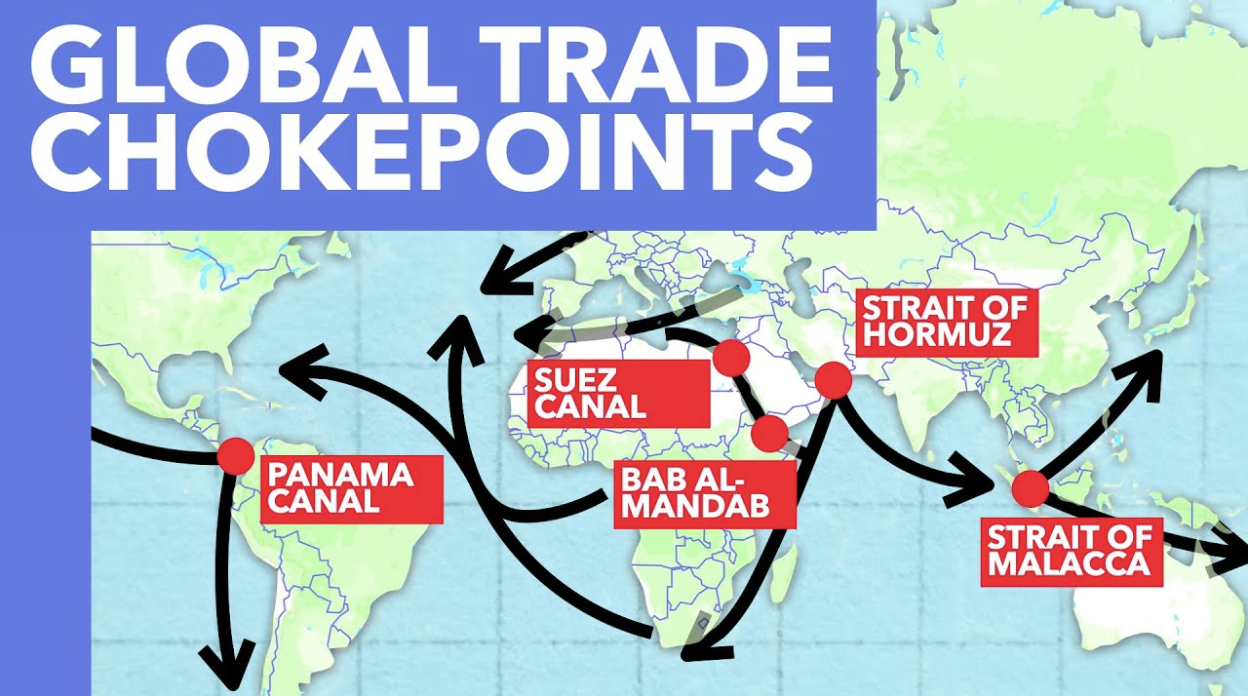
India may be a continental power, but its economy depends heavily on the sea. Around 95% of India's merchandise trade by volume and nearly 70% by value is transported through maritime routes. Critical chokepoints and corridors such as the Strait of Hormuz, the Bab-el-Mandeb Strait, the Red Sea, and the Suez Canal serve as lifelines for India's energy imports and trade with Europe and beyond. Any disruption in these routes delays shipments, raises freight and insurance costs, disrupts supply chains, and ultimately increases prices for businesses and consumers in India. What happens in these narrow waterways therefore has far-reaching consequences for India's economic stability. In many ways, such sea routes serve as invisible economic arteries for India. While they lie outside India’s borders, they serve a purpose similar to that of road and railway networks in domestic regions of the country. As India becomes more involved economically, being able to withstand external shocks will become as important as trading itself.
The Insurance Bill Nobody Sees
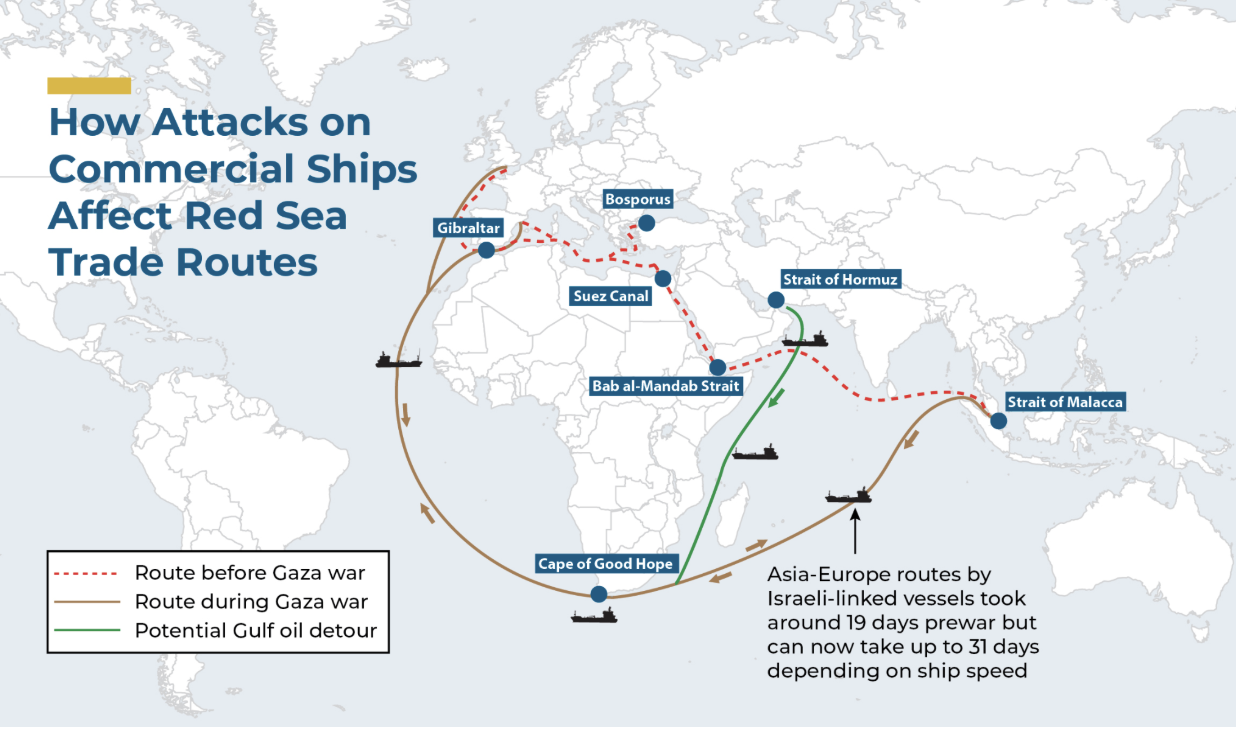
The consequences of a conflict in the Middle East include more than just the impact of volatility in the price of oil. The other effect is the cost of transport of commodities. Increased risks of shipping mean high war risk insurance costs for the companies. Although the route may be practical, the high cost of freight and insurance may make the route too costly, resulting in longer routes that lead to more fuel cost and delays.
Disruptions seen in the Red Sea provide an example of how vulnerable the routes are. Ships avoiding the Suez Canal by moving through the Cape of Good Hope route mean a long journey from Asia to Europe. It implies that if the country has heavy reliance on maritime transport, the cost of imports of energy, machinery, raw material, and consumer goods will increase.
It leads to the conclusion: the conflict affects inflation through logistics. While India is geographically far from the location of the conflict, the businesses and households can still face increased costs due to transport and import costs. Therefore, the geopolitical risk begins to affect India's economy without the direct military confrontation through the cost mechanism.
From Diaspora to Diplomatic Responsibility
Approximately 9 million Indians live and work across the Gulf.These Indians work across different sectors, from construction and healthcare to finance, hospitality, educators, engineering and technology. It makes the region central to India's economic and humanitarian interests. India’s large diaspora population located in the Gulf region has redefined the ambit of foreign policy responsibility. During times of crisis, New Delhi is no longer confined to making diplomatic statements but might have to protect and evacuate thousands of Indians from volatile regions.
Operations in the past, like Operations Ganga, Kaveri, and Ajay, indicate the growing ability of the Indian government to deploy airplanes, coordinate with foreign states, and evacuate their nationals during international crises. Such operations involve diplomatic maneuvering, access to airspace, cooperation with host countries, and quick decision-making.
Thus, the Gulf region poses a unique foreign policy responsibility for India. The lives of millions of people, income through remittances, and earnings of families in India depend on the stability of the region. The protection of the diaspora community is no longer a consular issue but an aspect of the strategic state capacity of India.
Connectivity as Opportunity and Vulnerability
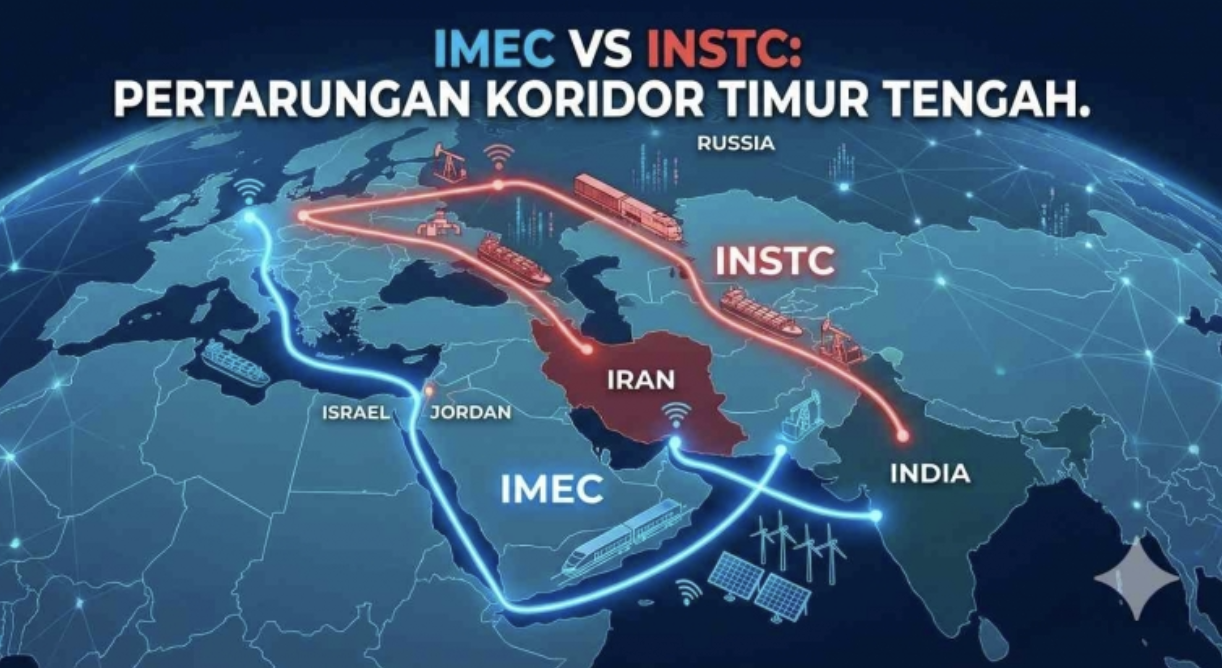
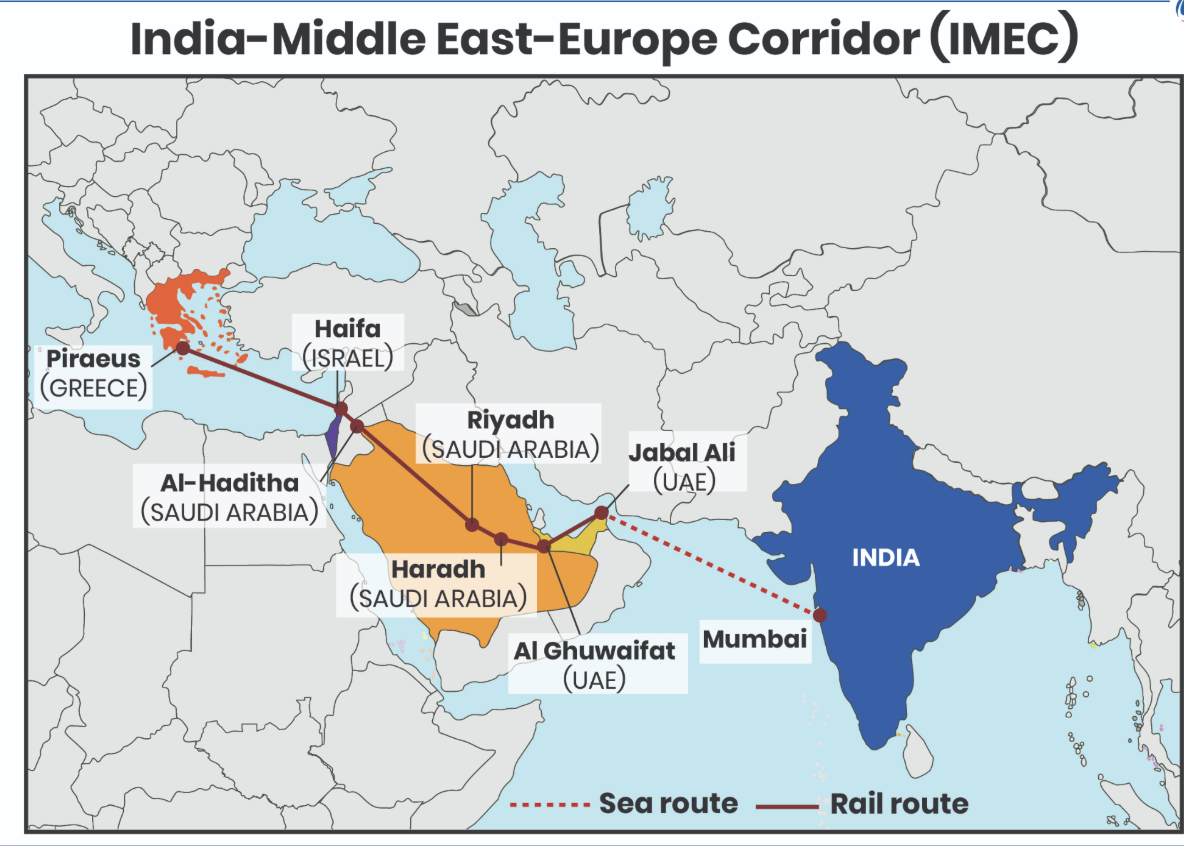
There have been increasing investments by India in alternative corridors for increasing connectivity, as is evident from the initiatives such as Chabahar port, International North-South Transport Corridor (INSTC) and India-Middle East-Europe Economic Corridor (IMEC). These initiatives help in ensuring greater strategic connectivity with West Asia, Central Asia and Europe.
There lies a paradox with connectivity. As India becomes increasingly connected with international connectivity networks, there are more avenues through which instability in geopolitics could impact India. A port might create opportunities for trade, but the instability in the corridor leading to the port will reduce its effectiveness. While the Suez Canal provides efficiency, the situation in the Red Sea indicates how easily that efficiency gets affected.
The problem thus cannot be solved by reducing connectivity but by building redundancy in it. India needs several routes, suppliers, ports and partners so that the disruption in any one of the corridors does not bring down the whole system. Thus, strategic connectivity needs to be seen not only as an avenue for growth, but as a tool of resilience. The idea is not to look for the right alternative route, but to ensure that India has enough alternatives if one route gets affected.
Balancing Rivals, Protecting Interests
India's challenge goes beyond economics. It must also navigate one of the world's most complex geopolitical regions. Choosing one partner over another would jeopardise vital interests. Israel remains an important defence and technology partner, Iran provides strategic connectivity through Chabahar and the INSTC, while the Gulf states are indispensable for energy, trade and the Indian diaspora. Rather than choosing sides, New Delhi has pursued a policy of maintaining relations with all major regional powers while avoiding entanglement in their rivalries. And this balance is getting more and more difficult as rivalries between regions escalate and great powers get directly involved. For India, diplomacy now is not about choosing allies anymore but about making sure that one alliance doesn’t threaten the other. However, the issue at stake for India goes beyond responding to crises once they emerge; it lies in developing an economy and foreign policy that are equipped to withstand external shocks originating from far outside India’s shores. Strategic vulnerability can only be reduced through diversification in energy sources, robust supply chains, and regional cooperation.However, the real issue is not whether India can isolate itself completely from the instability in West Asia; it cannot. The issue lies in managing costs while maintaining those relationships which are critical for India’s national interests in the long run
From Strategic Autonomy to Strategic Resilience
Whereas the central problem for India emerging from instability in the Middle East is not that India cannot distance itself from it, but that it can no longer do so. India's need for energy, diaspora, trade links, maritime lanes, and diplomatic interests have already made West Asia a subservient of Indian national prosperity, making it inseparably intertwined with India's economic and political well-being.
The new definition of strategic autonomy thus differs from the old one. Isolation from the rest of the world and protection against shocks is unrealistic in an increasingly globalized economy. It means India must strive for strategic resilience – a state of readiness to withstand external shocks without letting them turn into prolonged internal crises.
The development of resilience requires not isolation, but diversification. India needs to diversify its sources of energy, trade routes, build up strategic reserves, ensure a resilient supply chain and engage diplomatically despite regional enmities. As such, cooperation with Israel, Iran, and Arab Gulf countries must be understood as complementary approaches in pursuit of maintaining strategic flexibility.
The Middle East is unlikely to become stable, and is expected to remain volatile and important strategically. Events that happen there are not within India's control. What it can control is how vulnerable it becomes when something does in the face of such events. Thus, the effectiveness of India's foreign policy will come to be determined not by its ability to prevent them from happening, but to absorb, adapt to, and overcome them.
