
Where is South Asia? Or there is no South Asia!
The Islandification of South Asia: From Civilizational Fluidity to Regional Paralysis
Civilizational Unity
"South Asia is more than a geography; it is something resembling a civilization that has endured despite extreme diversity in every sense. With a history spanning ages, it has been the cradle of religious developments-including Hinduism, Buddhism, Jainism, and Sikhism-and is home to over a thousand languages and dialects. Surprisingly, despite such vast differences, it was historically a largely united, connected, and cohesive region, much like contemporary Europe, even across different dynasties, kingdoms, and British colonization. While South Asia spoke many languages, it remained rooted in a sense of togetherness. Although localized caste and religious distinctions shaped social life, widespread people-to-people hostility was rare. Contrast to the Western concept of the nation state which meant One Nation, one culture, and hard border, South Asia was mostly very fluid, a single geographic space holding a multitude of distinct cultures bounded by shared epics, narratives, philosophies and trade routes.
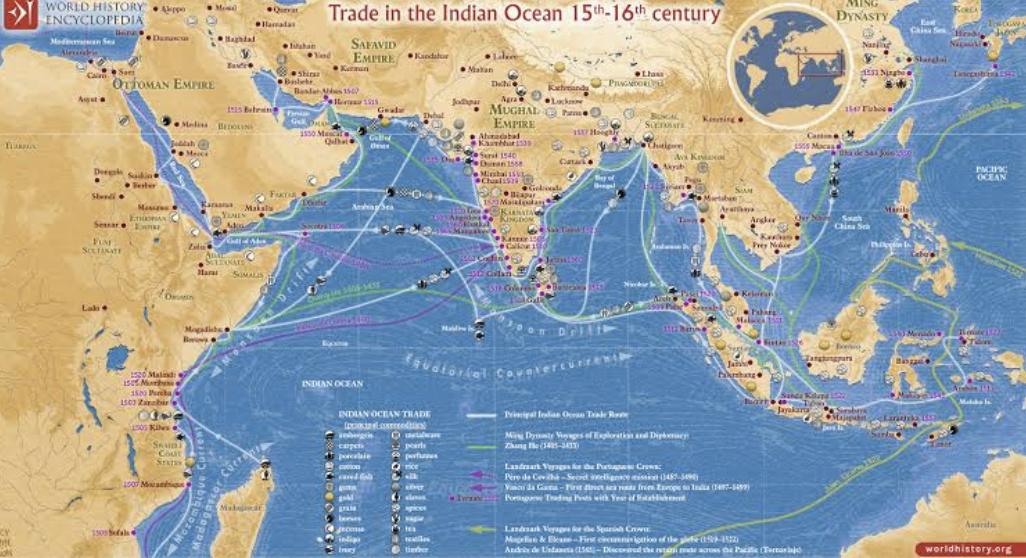
Pre-Colonial Inter-Local Trade Routes. Source: World History Encyclopedia
As quoted by Amartya Sen in The Argumentative India that historical unity came from a robust pluralistic tradition of public debate and internal heterodoxy, not forced political homogeneity. There was "Inter-local" connection as stated by Sugata Bose and Ayesha Jalal (Modern South Asia), during pre-colonial pilgrims, merchants and ideas flowed freely across regional kingdoms with navigable borders.Though a localized caste or religious fiction existed, it was fundamentally very different.
Elite political actors across both colonial and anti-colonial instrumentalized communal identities for institutional leverage, effectively injecting communalism down to the popular consciousness. As pioneered in various Subaltern Studies by historians like Ranajit Guha.
Colonial Disruption
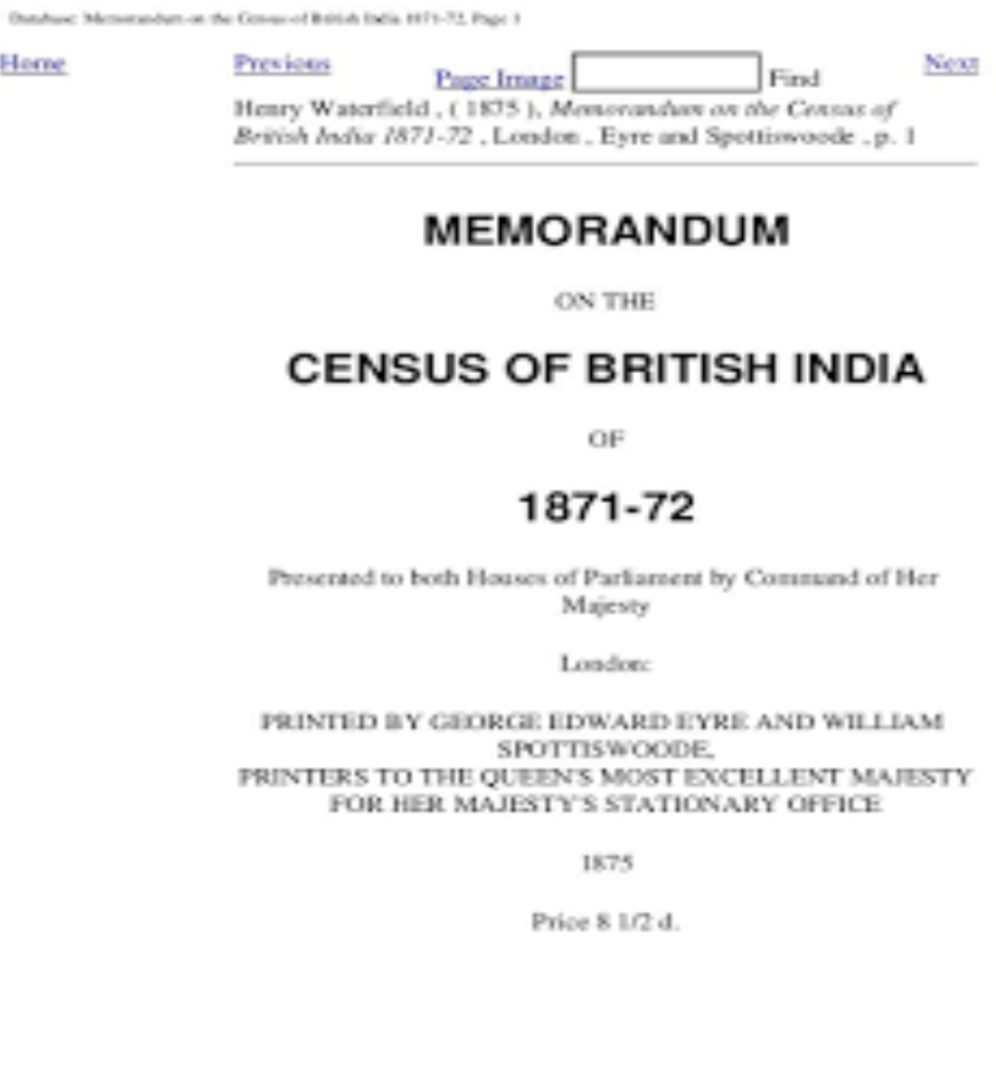
British colonization significantly altered this togetherness, systematically dividing societies through 'divide and rule' policies.Prior to British administration, religious and caste identities were fluid and overlapping. But the Census of India (1871) formalized under Denzil Ibbetson and Herbert Risley, forced millions of subjects to select a single rigid identity category. The Morley-Minto Reforms officially codified the separate electorate systems based on religion.In the central legislative Council out of 27 elected non-official seats, the British explicitly reserved:8 seats for Muslims,4 seats for British Capitalists,2 seats for Landlords. The British intentionally set the income and property qualification for Muslim voters lower than those for Hindu voters to artificially accelerate institutional competition. This earned viceroy Lord Minto the academic moniker “The Father of communal electorate.”
This followed the unified struggle after the First War of Independence (revolt of 1857) and the subsequent nationalist movements. Although nationalism helped people relate to one another more closely, it also had a depressing impact by attempting to construct unity based on selectivity rather than embracing organic diversity. Political facades, power struggles, ideological fantasies, and deep-seated insecurities during the final phase of independence drew lines across the subcontinent, dividing everything from water resources to ancient societies, down to families and neighbors.
Nicholas Dirks quoted in his thesis Castes of Mind, that British colonial administration actively shaped and rigidified the social hierarchies we see today to make the subcontinent easier to govern. In Nation and its Fragments Partha Chatterjee argues that anti colonial nationalism selected a specific, idealized version of cultural identity to unite the masses, which inadvertently marginalized minorities and sowed the seeds for post colonial division.
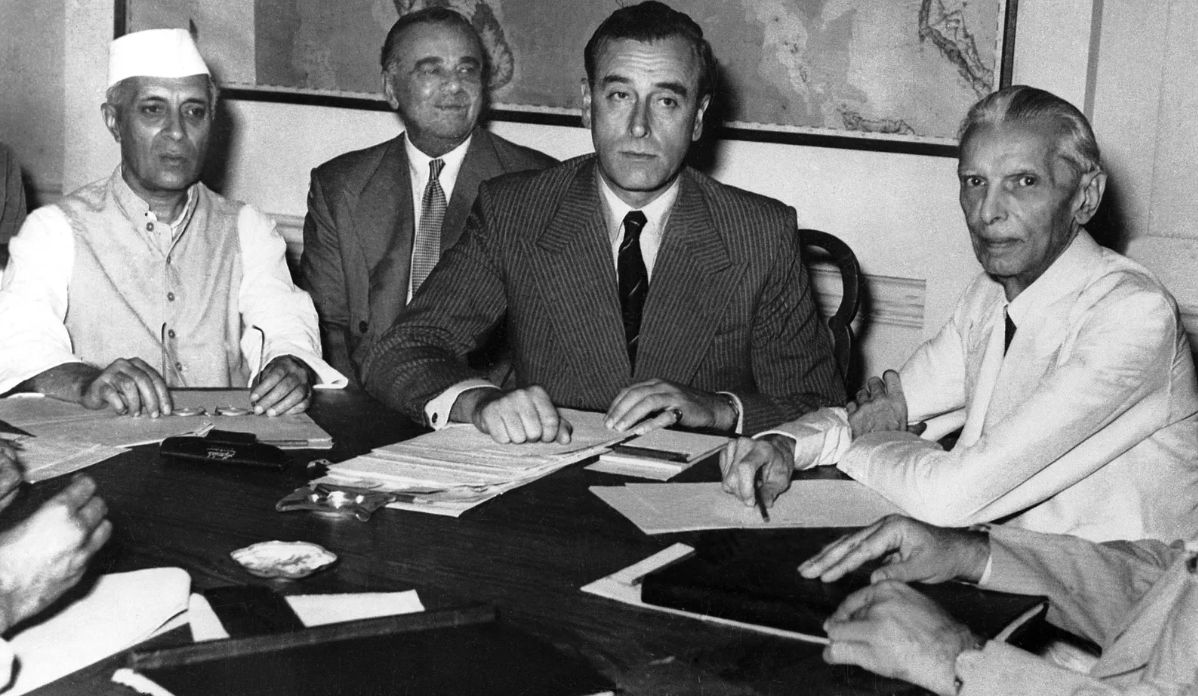
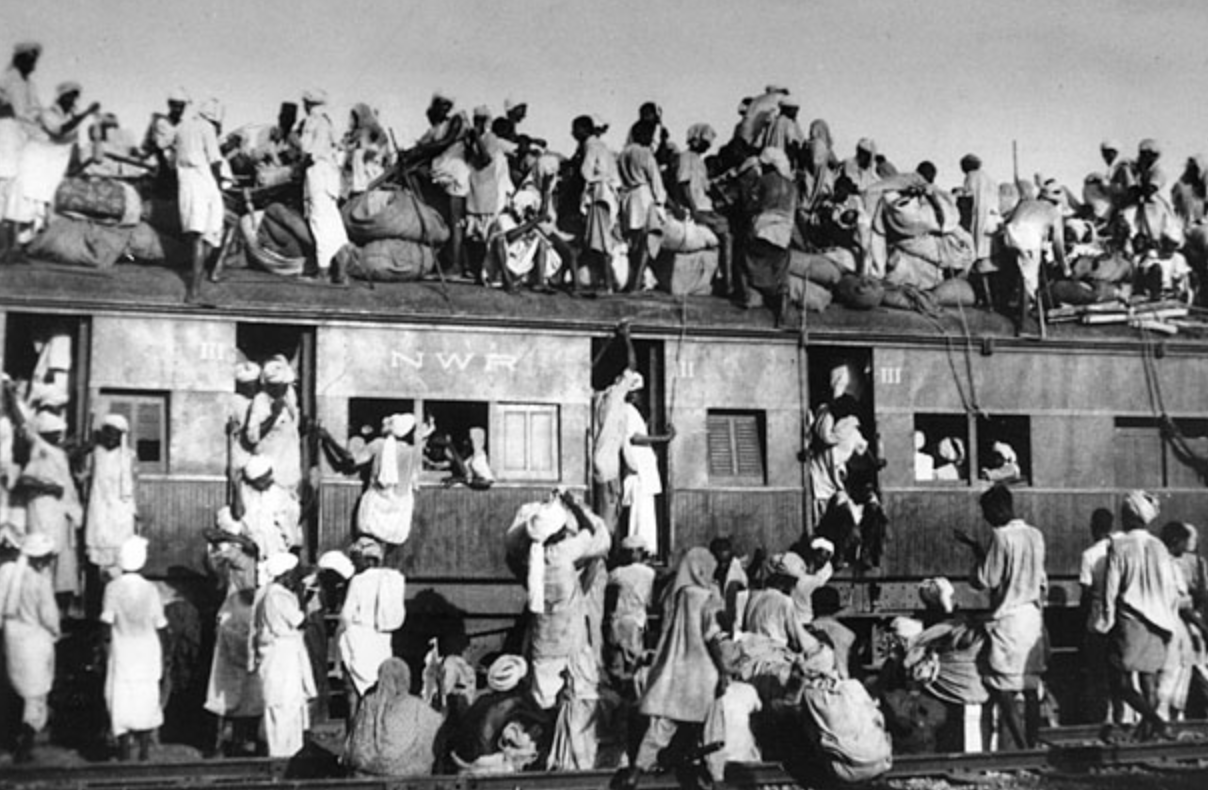
The Human Cost of Partition (1947). Source: Wikimedia Commons
Partition and Rivalry
Partition tarnished all hopes, drawing borders that have set South Asia on a trajectory toward 'islandification.' Given their sheer size, India and Pakistan became the dominant power centers, embroiled in disputes surrounding everything, including the foundational interpretation of nationhood itself-with India historically projecting a secular identity and Pakistan establishing itself as an Islamic state .In IR, ontological security, pioneered by Jennifer Mitzen (2006) and Brent J. Steele (2008), refers to a state need for a stable sense of self. India and Pakistan suffer from deep ontological insecurity, -the secular pluralistic premise of India inherently challenges the religious Two-nation theory of Pakistan and vice-versa. This makes their rivalry existential, beyond just territorial.
Islandification - is an active de-linking of regional geographic dependencies, contrasting to EU and ASEAN, where various economic agreements like Schuman declaration explicitly made war not merely unthinkable. In South Asia, the reverse happened, economic and cultural links were systematically cut to make war more structurally distinct. Because of India and Pakistan, other smaller countries are trapped in the middle. Instead of a unified South Asian identity, these smaller nations are forced to use strategic hedging. Bangladesh & Sri Lanka are relying on other initiatives like China Belt and Road Initiative for infrastructure funding because SAARC provides no regional development fund. In Nepal and Maldives domestic politics swing wildly between India first politics and pro-China alignment. Smaller states are not pulling South Asia together, instead they fear Indian dominance and the paralysis of Pakistan forces them to invite external global power (like China or the US) into the neighbourhood, further fragmenting the region. The EU succeeds because its members are willing to cede a portion of their national sovereignty to supranational institutions. ASEAN does not cede sovereignty but ASEAN WAY - a strict code of non-interference in each other's internal affairs and consensus. SAARC demands absolute unanimity but explicitly bans the discussion of bilateral contentious issues. This creates a structural paradox - the actual problem paralyzing the region is legally forbidden from being debated at the summits.
Every successful regional block requires its largest economy to act as a benevolent actor. When ASEAN was formed, Indonesia deliberately took a low profile accommodating stance. It allowed smaller states to drive the agenda to build regional trust. In South Asia, India accounts for roughly 80% of the regional total GDP, and shares a physical border with almost every other member. Because of its massive market asymmetry, smaller states view India's economic initiative with suspicion fearing economic colonization(The Big Brother Attitude). India conversely, often struggles to offer unilateral, traffic free concessions to its neighbor due to its own domestic political constraints. Resulting in Intra-Regional trade being barely 5% in South Asia, contrast to 25% in ASEAN, and 60% in EU.
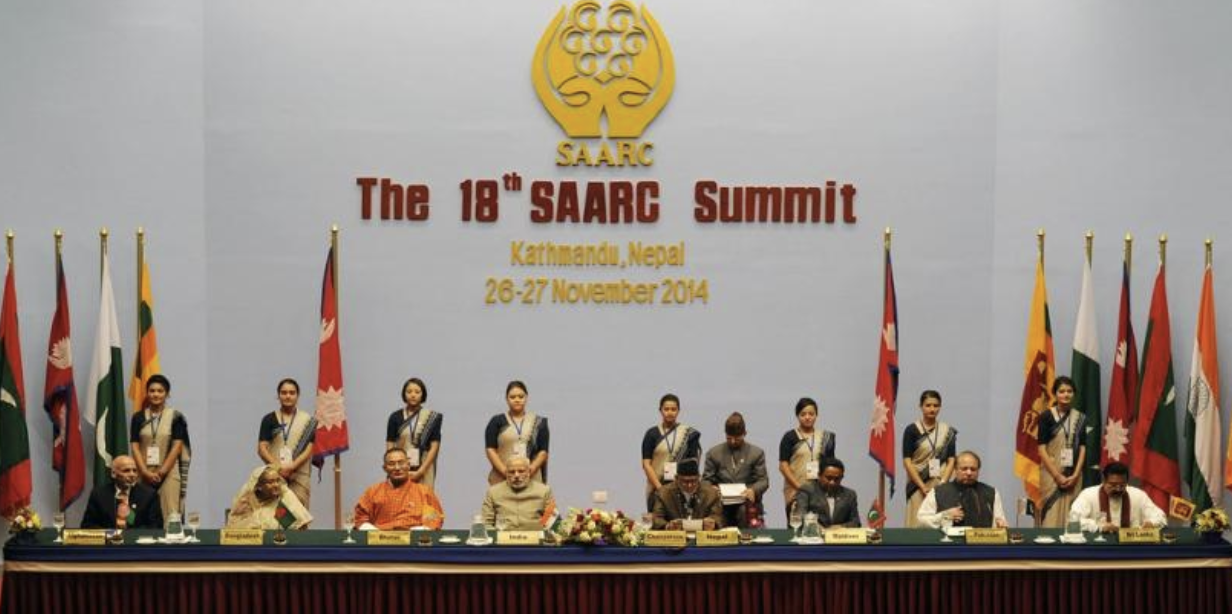
Leaders of SAARC countries at the concluding session of 18th SAARC Summit (November 27, 2014). Photo courtesy: Shivraj / Photo Division / Ministry of External Affairs, India
Islandification Today
While there have been multiple wars on the subcontinent, a concerning new pattern is gradually evolving: the wholesale destruction of people-to-people bonds. It is true that past efforts toward political consensus have repeatedly been disrupted-amounting to one step forward and four steps back—but the gradual erosion of direct human contact risks giving rise to isolated states within the global order, entirely disconnected from their own neighborhood. While India and Pakistan generally maintain functional relations with smaller South Asian nations like Nepal, Bhutan, Bangladesh, and the Maldives-barring occasional skirmishes-their overwhelming bilateral friction overshadows the entire region, making broader cooperation difficult and politically contested. This erosion of people-to-people connectivity is visible in the banning of movies, music, and now even the continental obsession of cricket. This deep freeze will make it incredibly difficult for South Asia to stand together on shared challenges, from the looming climate catastrophe to Chinese assertiveness or other global crises. Virtually no proper channel for subcontinental discussion remains active, especially since the Uri attack, which pushed SAARC into the background and rendered it largely non-functional. The ultimate result is a region in crisis, or perhaps, the end of the very idea of South Asia.
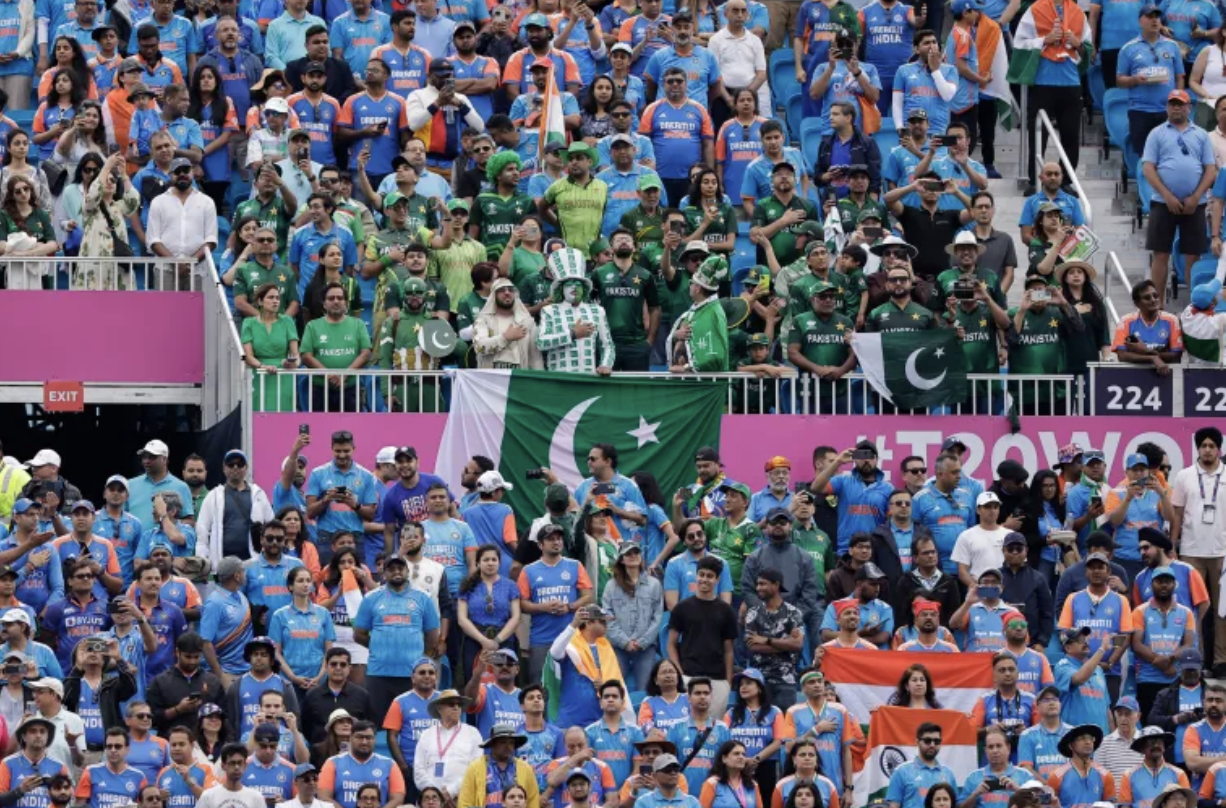
Fans stand as national anthems of two countries are played before the start of the match. [Adam Hunger/AP Photo] Source:Al Jazeera Photo Gallery
South Asia today stands at a crossroads, once a fluid civilizational space, now fractured by colonial legacies, partition, and the ongoing paralysis of regional institutions Yet this is not the end of the story.
This essay is Part 1 of a broader study of South Asia as a region. We will look at how South Asia can surmount its divisions and emerge as a more powerful regional actor, taking lessons from various regions to turn historic rivalries into a strategic engine for collective prosperity and security.
References
Bose, S., & Jalal, A. (2018). Modern South Asia: History, culture, political economy (4th ed.). Routledge. Cited by: 416
Chatterjee, P. (1993). The nation and its fragments: Colonial and postcolonial histories. Princeton University Press. Cited by: 9243
Dirks, N. B. (2001). Castes of mind: Colonialism and the making of modern India. Princeton University Press. Cited by: 4321
Guha, R. (1982). Subaltern studies: Writings on South Asian history and society (Vol. 1). Oxford University Press. Cited by: 2154
Mitzen, J. (2006). Ontological security in world politics: State identity and the security dilemma. European Journal of International Relations, 12(3), 341–370.https://doi.org/10.1177/1354066106067346 Cited by: 1842
Sen, A. (2005). The argumentative Indian: Writings on Indian history, culture and identity. Farrar, Straus and Giroux. Cited by: 3105
Steele, B. J. (2008). Ontological security in international relations: Self-identity and the IR state. Routledge
