
The region of Israel - The Tragic Irony of History Part 1
Rationale behind this Article
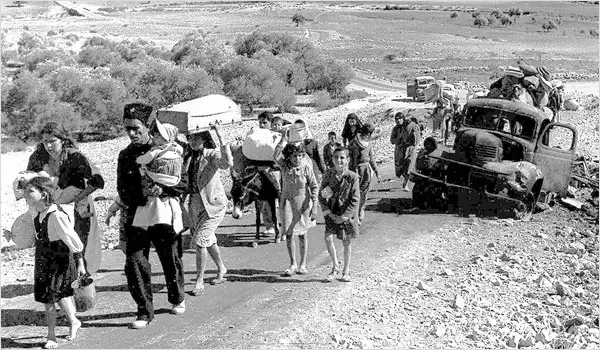
The Israel-Palestine-Iran issue always is seen as a blanket issue surrounding religious animosity behind the Jewish and the Muslim community. But is it really the case?
How did we even reach here?
If you are someone curious and tried to map a bit around the history of Israel, what you see are the Arab wars, the Six-Day War, and the Yom Kippur War. And something uncanny that you find there is that Iran was actually never against Israel at that time. You would be surprised to know that in the 1970s even there was a Missile Programme between Israel and Iran - Project Flower(1977) was a joint Israeli-Iranian military effort to develop advanced missile systems.
So what happened, that we are here now in the mess.
To give some context to what is about to unfold in the article below, what we see today in this region can be understood through a concept called “Victims of the Victims”, explained by historian Edward Said. This idea suggests that what we are witnessing is not a simple good-versus-evil or purely religious conflict, but rather a broader historical process at play.
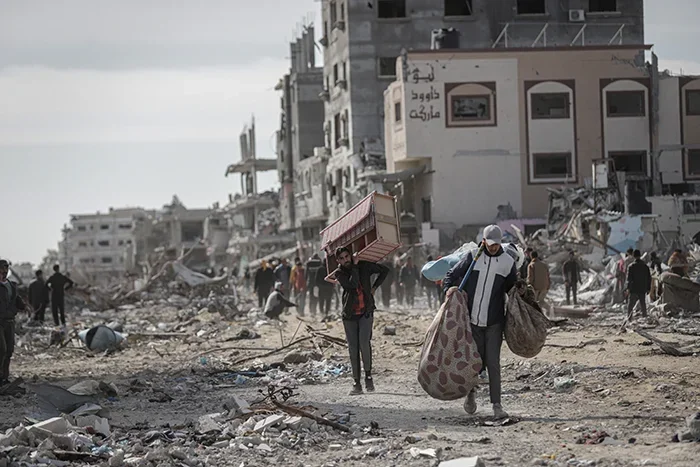
How Israel Came Up to Be
To understand this, we need to go all the way back to Roman history. The first large-scale persecution of Jews occurred during the Roman era in 70 CE, followed later by the Bar Kokhba Revolts of 132–135 CE. What happened here was not mainly religious, but rather a Roman strategy of dominance, a political and military response to perceived threats in the region. This marked the beginning of a significant movement of Jewish populations away from their homeland of Jerusalem.
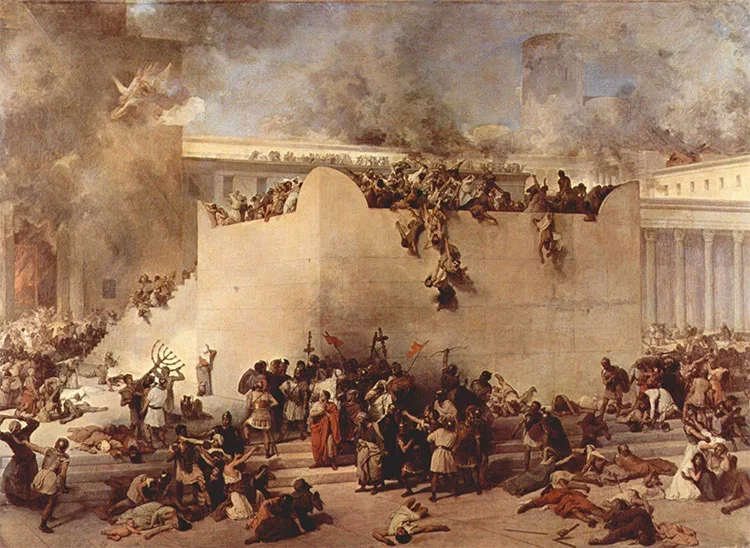
Bar Kokhba Revolts of 132–135 CE
Over the centuries, what followed was a threefold pattern of antisemitism, particularly across Europe.
First, theological anti-Judaism, linked to Christian doctrine and the idea that Jews were collectively blamed for the death of Jesus.
Second, social and economic persecution aka the Jews are the scapegoats. Jews, often well-educated and skilled, were involved in money-lending and trading roles. During periods of famine or social distress, hence Jews were easy targets for blame.
Third, the war games and differences in beliefs shaped by myths and accusations, including during the Crusades.
What followed over centuries were expulsions, pogroms (ethnic cleansing), discriminatory laws, and ghettos. As early as 1516 in Venice, Jews were forcibly confined to ghettos, long before Hitler and the carnage of the 1930s(Yes, you read this correct, ghettoization dates back to the 1500s and not just the 1930s era of Hitler!!)
However, the ideas of Enlightenment and Emancipation began to shift European attitudes, especially in Britain towards Jewish aspirations and sentiments. At the same time, Zionism, rooted in a historical longing to return to Jerusalem and the Land of Israel, began gaining momentum, especially amongst the influential Jewish community.
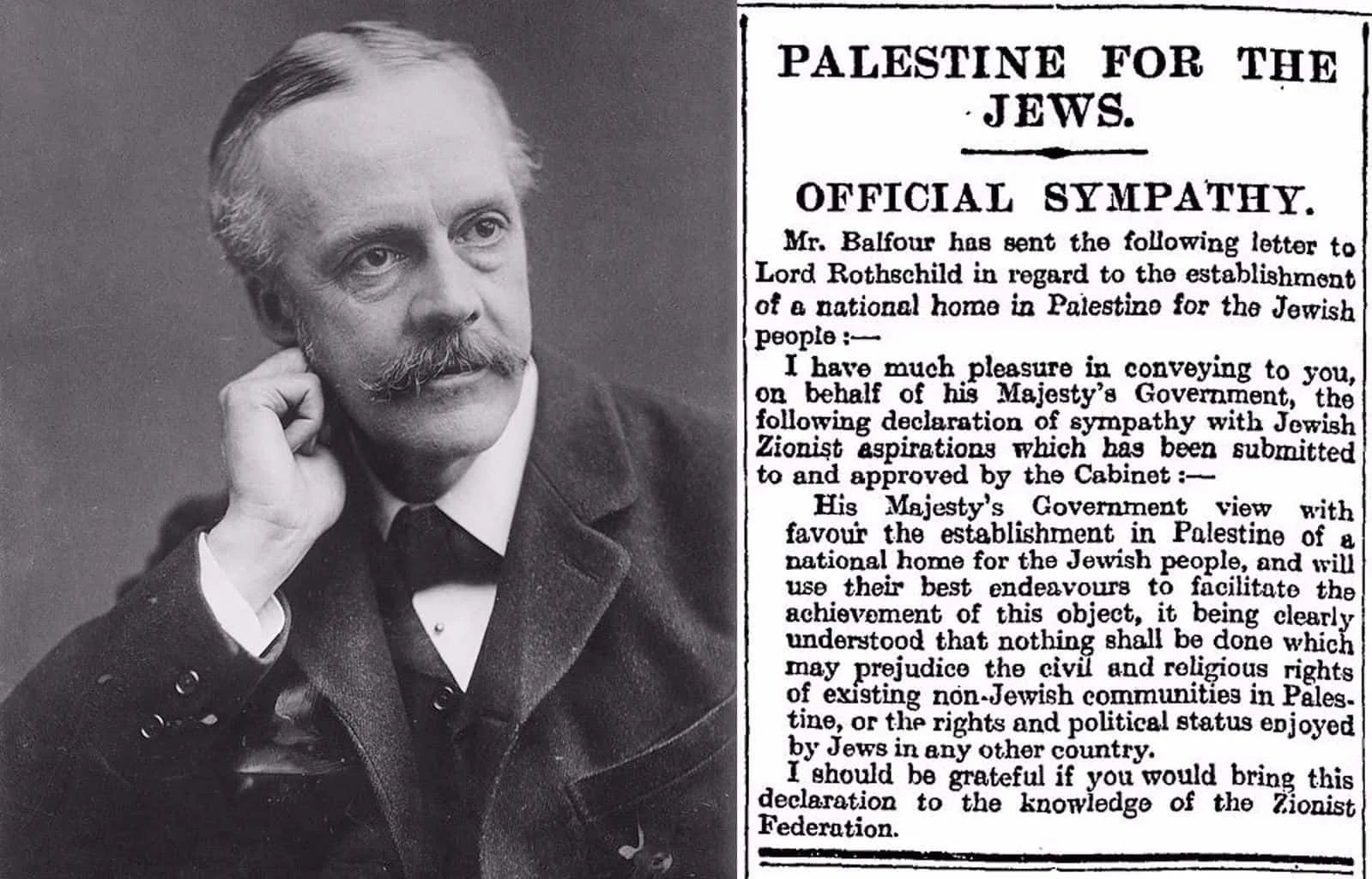
Balfour Declaration
British initiatives such as the Balfour Declaration and the Peel Commission followed for a strategic entry of the Jewish to their homeland of Jerusalem. But was this purely an act of sympathy or historical correction?
It was of course a strategic move, a move tied to control over trade routes, supply chains, and influence around the Mediterranean and the Suez Canal, in the post World War 1 Era and the discovery of Oil in West Asia(Drill Baby Drill!!)
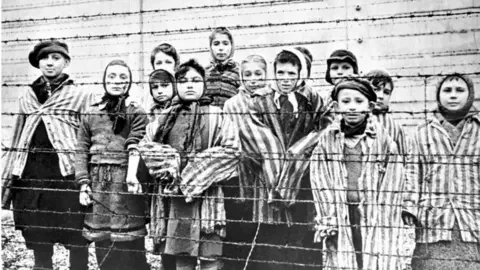
Then came the tragedy of the Holocaust, which accelerated the demand for a Jewish state and gave unprecedented moral urgency to the idea of Israel as a nation. Soon after, the UN Partition Plan of 1947 allocated 55% of Palestinian land to a Jewish population that made up roughly 33% of the total population.
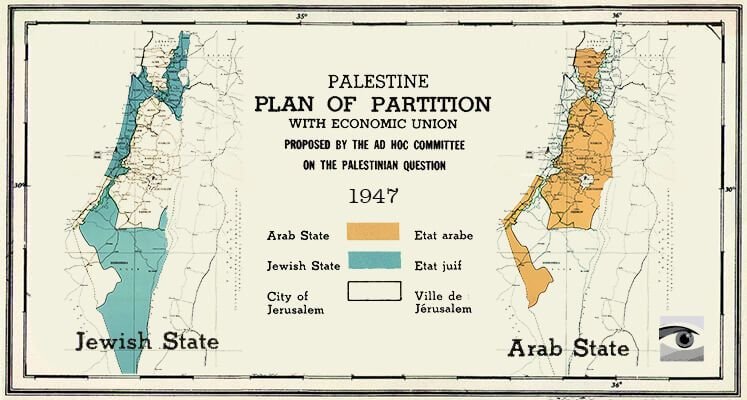
The UN Partition Plan of 1947
This marked the formal creation of Israel, and with it began the next chapter of the story, the displacement of Palestinians.
Israel’s Rise
For Israel, the priority was survival, and when your priority is survival, and you are surrounded by states that frown at your residency in their dominated region, sparks are meant to rise, because for the Arab states, this appeared as a violation of regional integrity and a continuation of Western colonial influence in the Arab world.
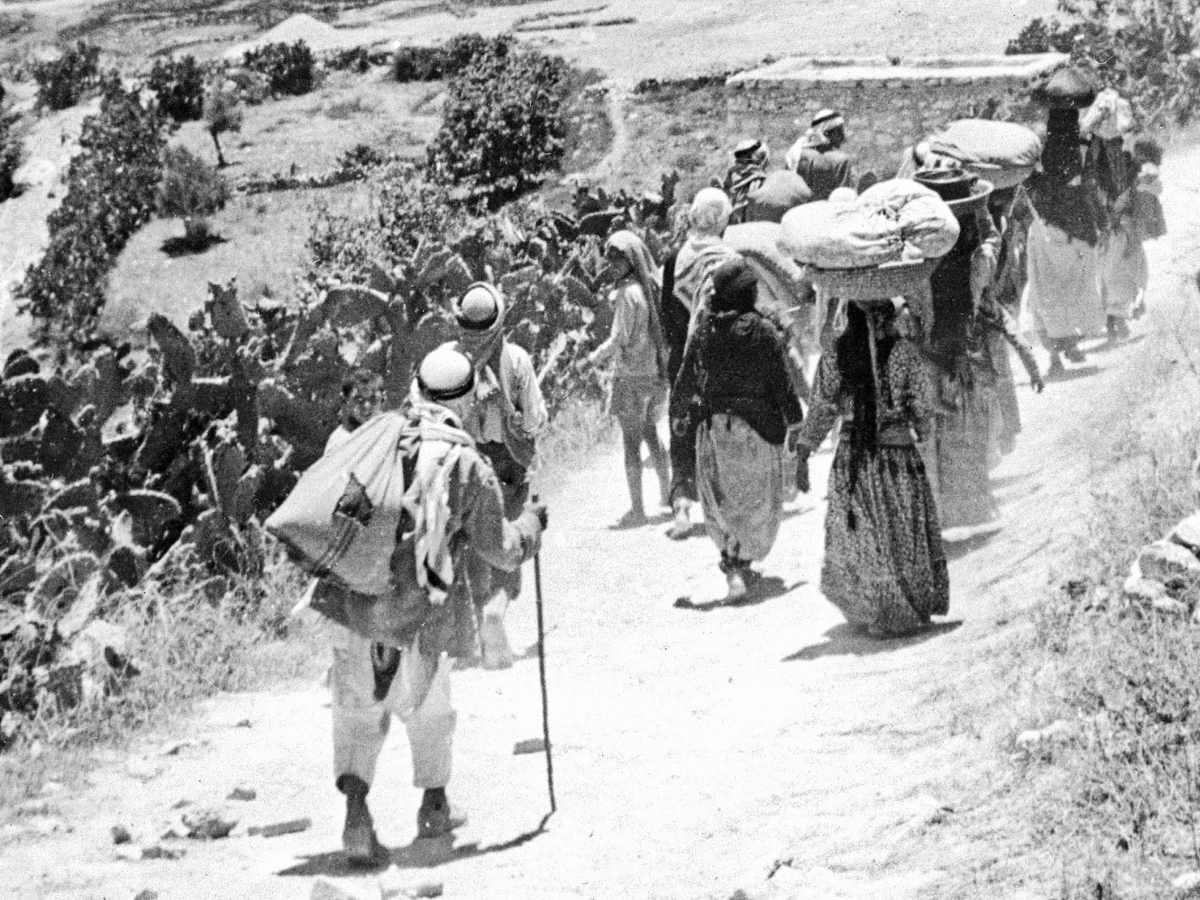
The Nakba of 1948
The Nakba of 1948(The Nakba is the ethnic cleansing of Palestinian Arabs by Israel through their violent displacement and dispossession of land, property, and belongings) resulted in the displacement of nearly 700,000 Palestinians. Yes, the very same Jewish people that saw persecution and displacement at the hand of Romans, inflicted a similar pain on Palestinians(Tragic Irony in it!!)
This was followed by a series of wars: the 1948 Arab–Israeli War, the 1967 Six-Day War, and the 1973 Yom Kippur War. However, my aim here is not to simply recount military history, that is something we have always read, and requires another article for its true justice.
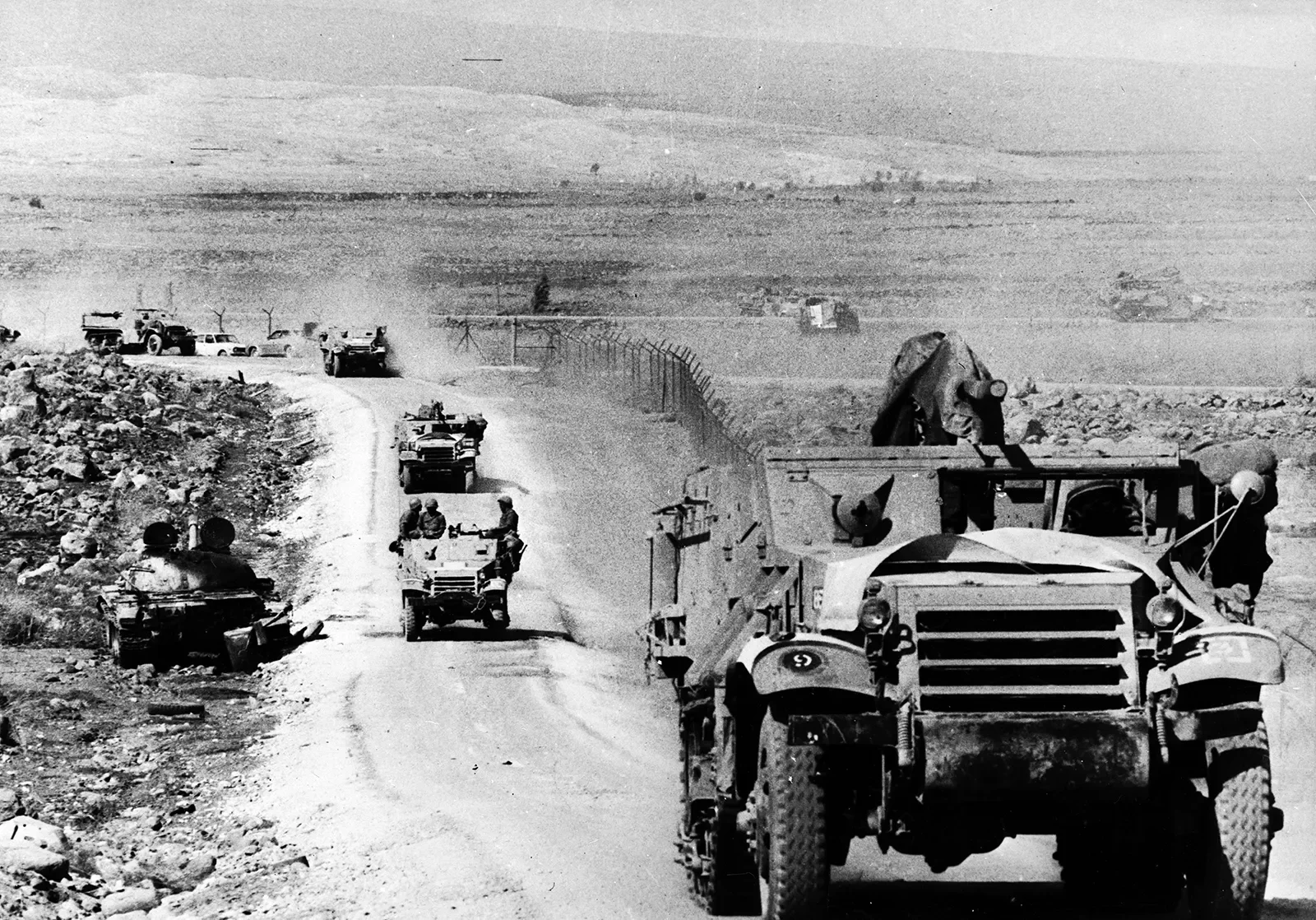
The Arab Israeli Wars
So then what?
As I said in the beginning of this article what we often see today is a framing of this conflict as a purely religious or holy war, a simplistic good-versus-bad narrative. But was this really how it began?
Revisiting the History of Persecution
What Were the Elements of Persecution of Jewish Communities under Islamic Rule?
When I looked into the Islamic rule in the Middle East and broader Western and North Africa, what became clear was that Jewish experiences under Islamic rule were twofold.
On one hand, large parts of the Muslim world treated Jews as dhimmi. Under this system, Jews were granted protection as second-class citizens, allowed to practice their religion freely in exchange for a special tax known as jizya(link to the way Indians had to pay Jizya to Mughals, the Jodha-Akbar serial right!?). This arrangement enabled long periods of coexistence, particularly under empires like the Ottoman Empire, where Jewish communities lived, traded, and practiced their faith without facing targeted persecution.
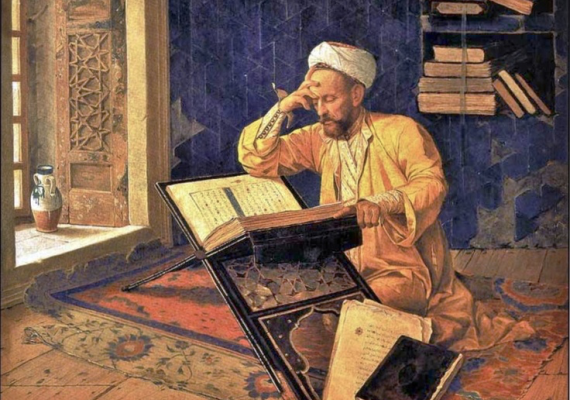
The Dhimmi status and the allowance for practicing religion
On the other hand, yes there were also instances of repression. A prominent example is the Almohad dynasty, which ruled parts of North Africa and the Iberian Peninsula. Under Almohad rule, Jews and even Christians faced forced conversions, expulsions, and persecution. So yes, there has been recorded events of persecution in the history of the Jewish community.
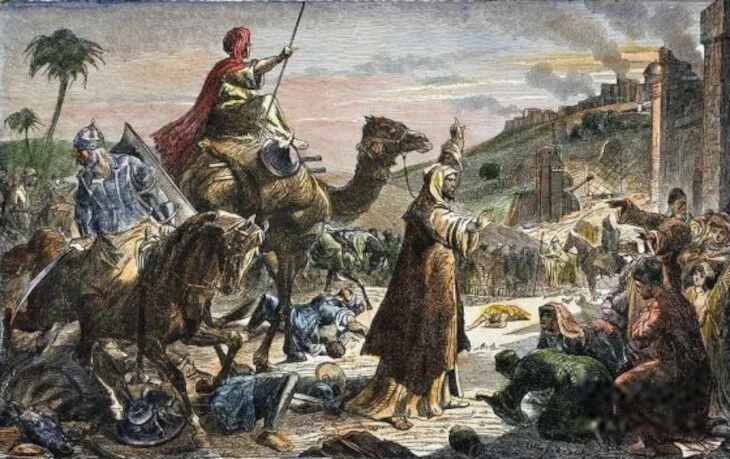
Repression under Almohad Dynasty
So yes, historically speaking, Jewish life under Islamic rule was neither uniformly tolerant nor uniformly oppressive. It depended on the ruling dynasty, political context, and time period.
This distinction is important because it introduces another dimension to our story and discussion.
Is What We See Today Really Just About Religion?
In the present day, the conflict is often portrayed as purely religious, a holy war or a good-versus-evil struggle.
But was this really the case at the beginning? The evidence so far suggests a no - the Dhimmi angle, the Israeli Iranian cooperations!?
So here is what I can make out from the story and history at hand. The establishment of Israel in 1947 marked a decisive turning point for the entire world. After centuries of European persecution and the trauma of the Holocaust, the Zionist movement received enormous moral momentum, and hence a common consensus was that this can never happen again. There had been biblical significance also attached to the idea that Jews were supposed to return back to their ancestral homeland. But alongside morality and theology, geopolitics and imperialism have always played a decisive role.
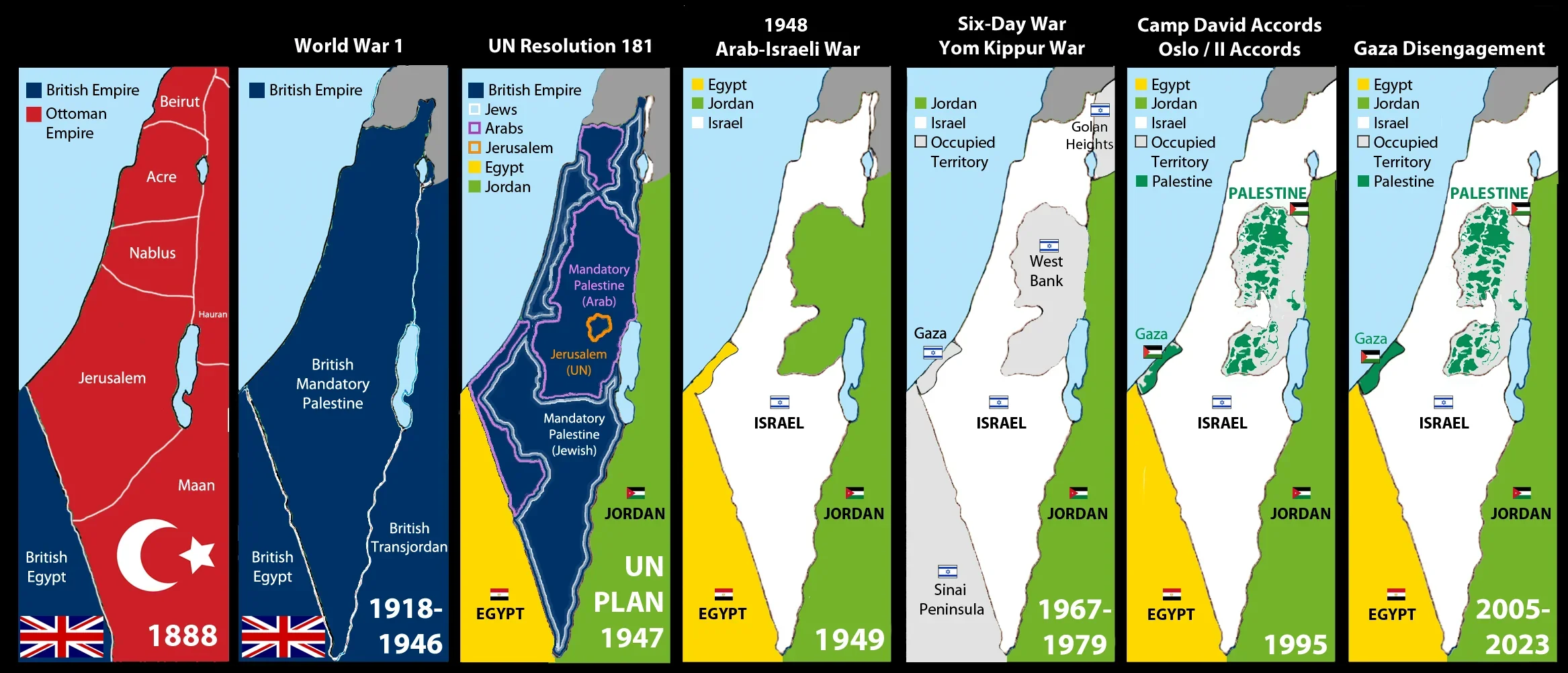
The Map of Palestine over the Years
Technically speaking, Israel was created in a region where Palestinians were already living. This partition was not just driven by religion alone, but by strategic calculations. In many ways, Europe attempted to atone for a European crime by reshaping West Asia, and also leaving a region/location which had strategic benefit to them in the long run.
But what was the cost?
It was the people of Palestine who ultimately bore the cost of this reshaping and redrawing of boundaries.
This is where the idea of tragic historical irony begins to take shape.
The Tragic Irony: Victims Becoming the Victims of Victims
The persecution that Jews had endured for centuries was repeated, now in a different form. What came now was the displacement of Palestinians. As Israel expanded and consolidated itself, Palestinians were forced out of their homes, villages were erased, and identities were reduced to refugee status(the Nakba). For Israelis, this was perceived as a final opportunity for survival, the last chance to secure safety in a world that had repeatedly failed them. From that perspective, Israel did what it believed was necessary to survive.
So here is the confusion and debate again - Is what we see today simply a religious clash, or is it the outcome of unresolved historical trauma, colonial guilt, and survival instincts colliding in one geographic space?
A Historical Reference to the opinion/investigation done above!!
Edward Said famously described this situation as “the victims of the victims.” His argument was not about denying Jewish suffering. Rather, it highlighted a tragic reality: Palestinians paid the price for crimes they did not commit, crimes that were largely European in origin. Going by the Google Definition - The phrase "victims of victims" describes a cycle of trauma or abuse where an initially aggrieved party (the primary victim) later perpetuates harm onto others. This creates a chain reaction where the resulting sufferers are victimized by someone who was originally victimized themselves.
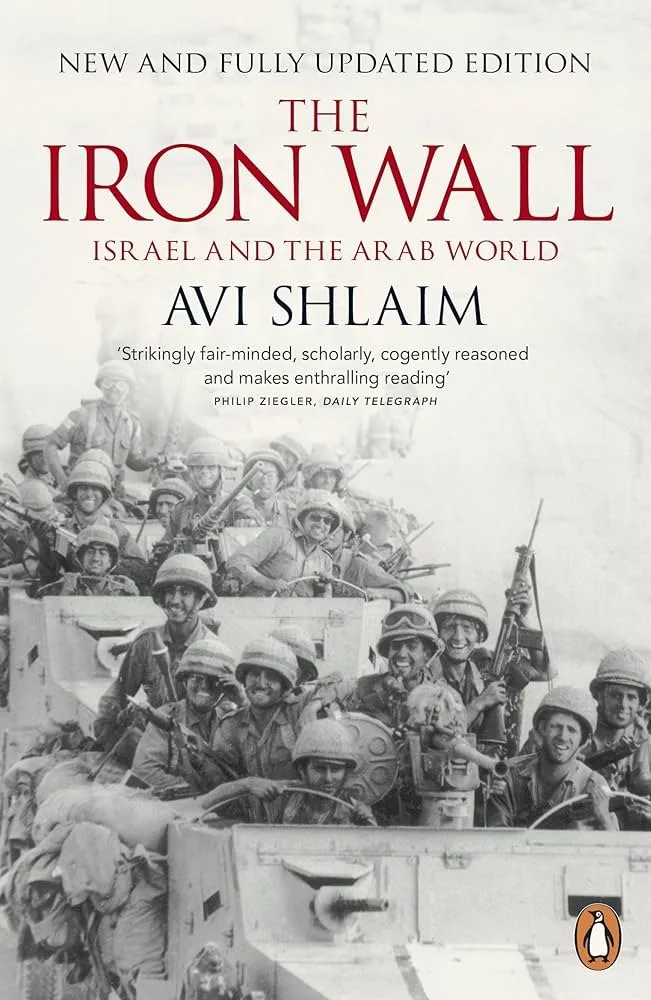
Historian Avi Shlaim offers another perspective through his Iron Wall and Realpolitik framework. Shlaim argues that Zionism was fundamentally a secular nationalist movement, not a religious one. It recognized early on that Arab resistance was a natural response to displacement. From this view, escalation was driven by political survival rather than divine hatred.
In other words, the conflict did not spiral because people hated each other’s gods. It escalated because two survival narratives were forced into the same land, shaped by global geopolitics.
The Structural History - Another Leaf from a theoretical perspective
What happened in West Asia, is not a singular topic, but structured events extended over a large scale of time.
This is where Fernand Braudel’s idea of Structural History becomes relevant. Braudel argued that history should not be viewed simply as a series of dramatic events or powerful individuals, but as something shaped by long-term structures such as geography, empires, economic systems, and global power arrangements. He called this the longue durée. Through this lens, the Roman legacy of displacement, Europe’s history of antisemitism, the collapse of empires, and Cold War geopolitics appear not as isolated moments, but as overlapping layers converging in West Asia.
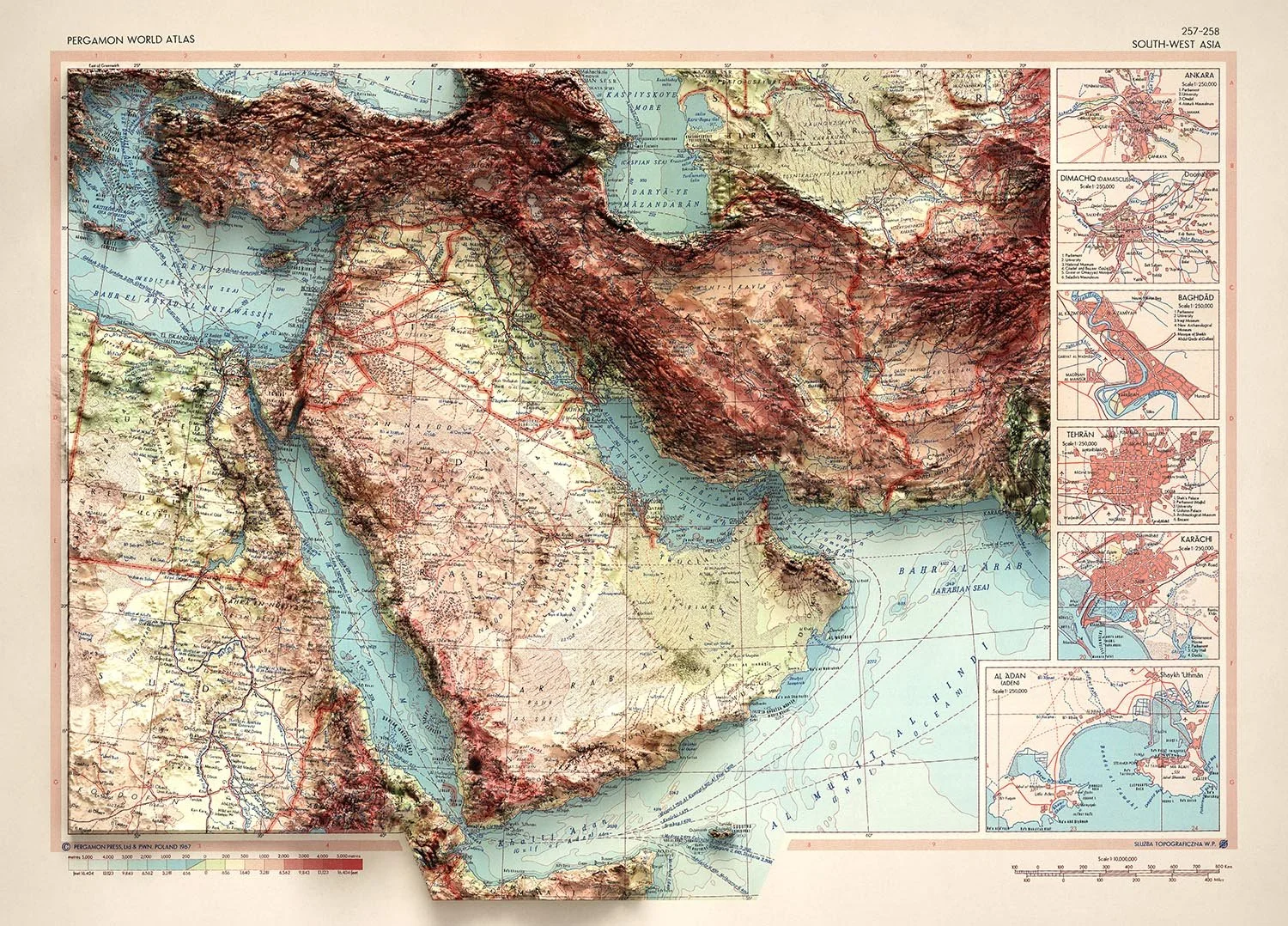
From this perspective, the Israel–Palestine conflict is not an accident of history. It is the outcome of structural forces colliding. Europe’s unresolved guilt, the rise of nationalism, Cold War strategic needs, and the vacuum left by collapsing imperial systems all collided in one geographical location. This made conflict not just possible, but deeply embedded.
Reducing the Middle East question to a timeline of wars misses this broader picture of the history. It should hence be better understood as a byproduct of long-term global transformations rather than ancient hatred or divine command. Seen this way, the tragedy is not only political or religious. It is structural.
PS: Not a realpolitik guru to give a final verdict or solution, but this is what I feel when I see this region!!
But yes of course, there are religion animosity to this region, and to shy away is to make a generalized conclusion, so in the Part 2, the Religion as an angle for this region will be discussed now!!
