
Ami Sonar Bangla Series - Article 2
DILLI NA DHAKA? DHAKA! DHAKA! - “MD YUNUS : NOT AN ACCIDENTAL PM”
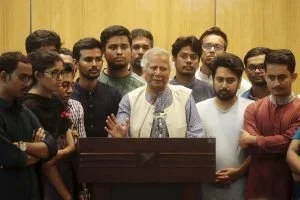
The collapse of Mujibism, as analyzed in the previous article, left a profound ideological vacuum in the heart of Dhaka. The July Revolution, acting as a geopolitical rupture, dismantled the hegemonic apparatus of Sheikh Hasina's Awami League, pushing the nation into an interregnum. Yet, the leadership that emerged from the ashes of this structural collapse was not forged by serendipity. When Sanjaya Baru penned “The Accidental Prime Minister”, he detailed the archetype of a technocrat elevated to power through political compromise rather than electoral mandate. Observers initially applied a similar heuristic to Muhammad Yunus in Bangladesh, framing him as a reluctant academic and Nobel laureate summoned by fate to stabilize a fractured state. This is a profound misreading. Yunus is not an accidental prime minister; he has demonstrated the acute maneuvering of a typical, calculated politician.
Credit : The Diplomat
The formation of the Yunus administration immediately triggered a legitimation crisis. Was this merely a caretaker government, or an unelected executive apparatus seizing a historical void? The constitutional ambiguity is glaring. Sheikh Hasina's official resignation letter has never been found, leaving her formal departure a matter of dispute. Following her flight, the Bangladesh Parliament was unceremoniously dissolved, and political prisoners, notably Khaleda Zia, were released. Yunus was nominated by the Students Against Discrimination (SAD), a loosely organized coalition lacking formal democratic standing. As a result, the interim government inherently lacked electoral legitimacy. The political reality, however, is heavily influenced by personal animosity. The rivalry between Hasina and Yunus dates back to the military rule era concerning the Grameen Bank, and escalated dramatically when Yunus allegedly leveraged his international influence to stop World Bank funding for the Padma River bridge. Hasina famously remarked that Yunus should be "dumped twice into the Padma, but not killed," eventually slapping him with a six- month jail sentence. Now in power, Yunus has operationalized the state to enact a politics of revenge. He has painted the Awami League as a terrorist entity responsible for over 1,400 deaths during the protests, pushing for a ban on the founding party.
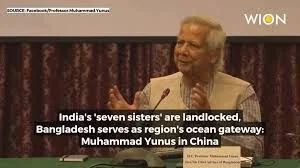
This exclusionary tactic survives without forging broad political consensus. Yunus, meanwhile, has deflected domestic scrutiny by positioning himself on the global stage, undertaking 11 international visits and commenting broadly on global affairs. His political acumen is evident domestically too: when Islamist riots threatened his tenure, many expected his resignation, but he held firm. Furthermore, Yunus acutely understands his geopolitical mood of his nation, maneuvering through complex dynamics like the Siliguri "Chicken Neck," Chinese proximity, and framing Bangladesh as the "only guardian of the ocean", and also courting US deep-state interests through the controversial Rakhine corridor safely without much negative PR despite heavy domestic assumption.
Credit :Wion
Yunus has framed this era not merely as a transition, but as the "Second Liberation" ofBangladesh. By congratulating the youth on a "fresh start and a new world," he attempts to construct a new founding myth. However, Yunus has not remained a mere reformer; his actions signal a transition into a power-monger. Through delayed elections, expanding administrative mandates, and excessive international diplomacy, he has stretched the caretaker stance to its limits. The rationale that "an election done wrong will never solve anything" serves as a convenient justification for indefinitely postponing democratic processes, a logic entirely incongruent with his self-styled positioning as a global liberal.
Source : TheFinancialExpress
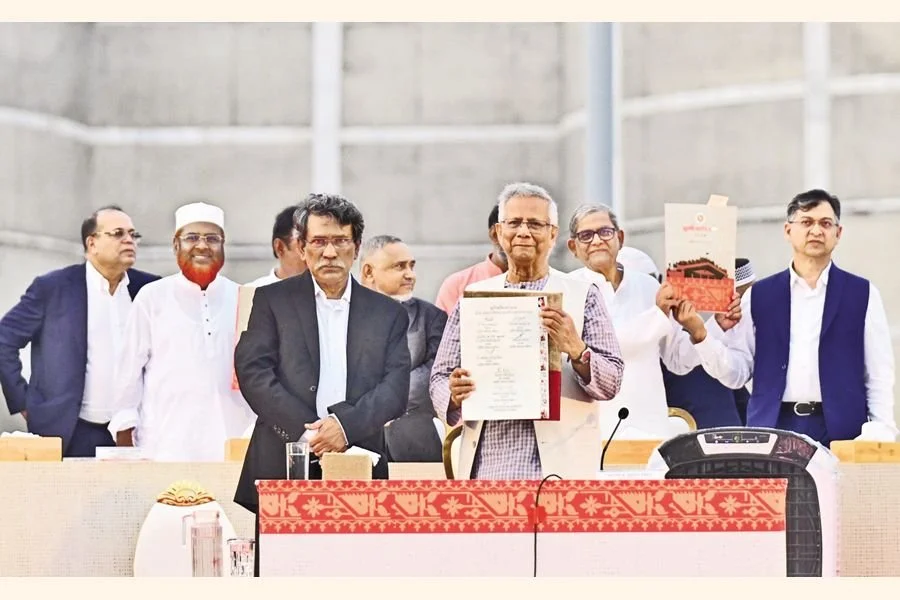
The institutional focal point of this "Second Republic" is the ambitious July Charter. The charter proposes sweeping constitutional overhauls: reducing Prime Ministerial power, empowering the Presidency, transitioning to a bicameral legislature (with proportional representation in the upper house and first-past-the-post in the lower), electing the President via secret ballot in both houses, instituting PM term limits, removing party whips (except on no-confidence motions), and cementing a permanent caretaker government mechanism during election periods. However, the mechanism of its approval mirrors historical authoritarian maneuvers. Initially designed as a part-by-part referendum, it was abruptly shifted to a blanket "Yes/No" clearance. This draws a chilling parallel to General Zia-ul-Haq, under his misled assumptions of prophecy, held the 1984 referendum in Pakistan, where he sought blanket approval for his policies, secured a manufactured 98.5% "Yes" vote, and subsequently consolidated supreme power via the 8th Amendment. The July Charter risks a similar legitimation crisis. It represents a revolutionary zeal devoid of structural political consensus. The Awami League is barred, while the BNP, Jamaat-e-Islami, and the NCP form a chaotic, uneasy alliance supporting the referendum. NCP, before allying with Jamaat, paradoxically didn’t sign the charter, but demanded its implementation. The failure of the Arab Spring stands as a stark warning: revolutions often swallow their own children when institutional restructuring lacks inclusive democratic buy-in the way Tunisia did.
Source : The Indian Express
Amidst the institutional decay, the Bangladesh Army remains the sole functional apparatus of the state. Army Chief Waker-uz-Zaman has become the indispensable guarantor of the interim government's survival. However, his stark warnings that timely elections are imperative, lest the country face a dire situation and a "possible counter revolution" highlight the fragility of Yunus’s civilian mandate. The military’s patience with an unelected, prolonged administrative overreach is not infinite.
Source : Swarajya
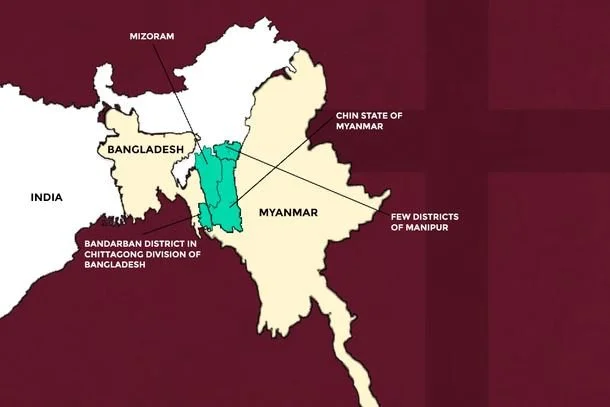
Geopolitics complicates domestic fragility. Prior to her fall, Hasina made explosive claims regarding foreign plots to carve out an independent Christian state in the region (incorporating parts of Bangladesh, India and Myanmar). While initially dismissed as paranoia, the prominence of the "America Angle" cannot be ignored. If India was the patron of Hasina in Bangladeshi rhetoric, Yunus is unequivocally the darling of the West, particularly the Biden administration. Open US support for the Rakhine corridor and subsequent internal reshuffling within the Bangladesh Armed Forces point toward a strategic alignment with Washington. Early in the intergennum phase, figures like Salimullah Khan, a prominent Lacanian-Marxist and anti-colonial scholar heavily influenced by Frantz Fanon, who vehemently criticized Bangladeshi elites for their "Anglocentric colonial cringe" were expected to shape the ideological core of the new government as per local media reports. However, his rapid marginalization from the interim administration might signal a deliberate re-establishment of Western influence and the sidelining of radical, decolonial intelligentsia.
Source : SouthAsiaJournal
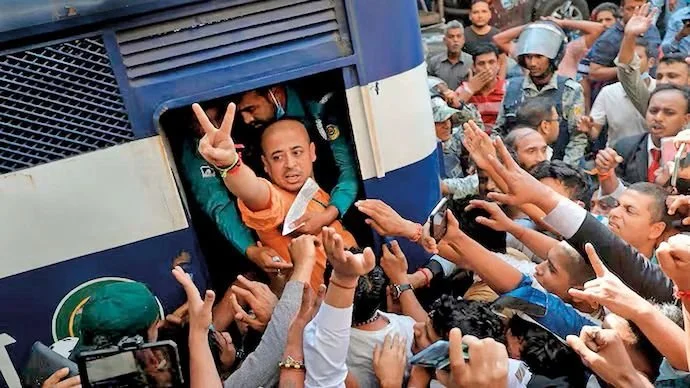
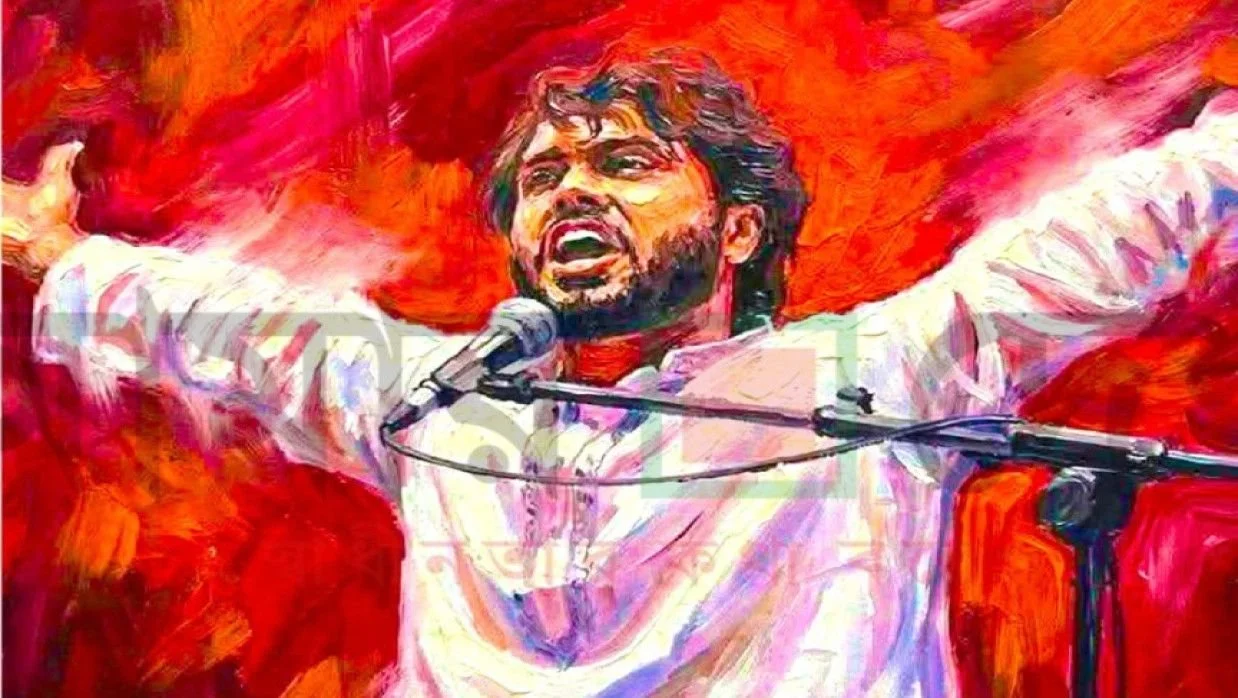
Perhaps the most alarming development under Yunus has been the rapid Islamist turn of the polity. The interim government has failed to maintain a monopoly on violence, effectively devolving into mob rule. Figures like Osman Hadi, associated with the Inqalab Mancha, weaponized rhetoric against "Indian hegemony" and "cultural fascism." By displaying maps of a "Greater Bangladesh" and romanticizing the restoration of the Bengal kingdom lost by Siraj-ud-Daulah, fringe elements have hijacked the narrative of democracy and rule of law. The assassination of Osman Hadi ignited massive riots. The offices of the Daily Star and Prothom Alo were set ablaze, who were in fact Hasina critics even during her peak years, with journalists noting that the mobs "didn't just want to attack us, they wanted to murder us." This radicalization saw the fringe become an overwhelming mainstream. Cries of “Dilli na Dhaka? Dhaka! Dhaka!” took over the streets. The rhetoric was Dhaka, not Delhi controlling the Bangladeshi destiny. The horrific lynching of a Hindu man, Dipu Chandra Das, burnt alive while thousands recorded videos was falsely attributed to blasphemy; the police themselves confirmed no such evidence existed. Concurrently, the release of the Al-Qaeda-linked chief of the Ansarullah Bangla Team (ABT) has sent shockwaves through the region. Even the conservative BNP has been stunned by the Islamist wrath on the streets. From a Marxist perspective, this radicalization is fundamentally rooted in severe economic distress. The protests were never solely about employment quotas; they were the eruption of systemic class anxieties exacerbated by the post-COVID economy and the Russia-Ukraine war. The erosion of secular democracy in a Muslim-majority nation, coupled with collapsing investor confidence, threatens to plunge Bangladesh into a military-sanctioned dysfunction akin to Pakistan. The possibility of Islamists toppling the Yunus regime remained as significantly possible.
Source : GKB Media Photography
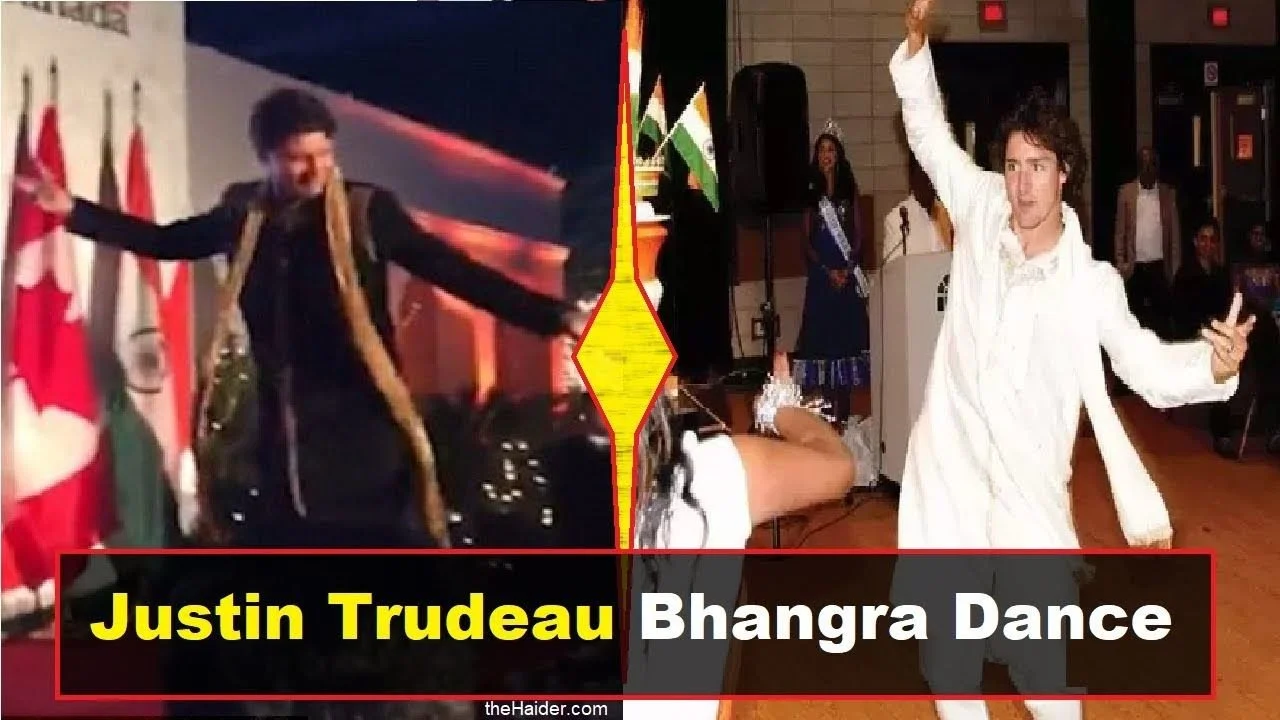
Cornered by escalating mob violence and the Army Chief's warnings of a counter-revolution, Yunus realized his political survival required an exit strategy. After bleeding democratic capital by delaying the vote, he was forced to announce that elections must occur, though he made clear he would not be part of the new government. The harsh reality was that the interim government did not merely lose control, it never had it in the first place. Just as Justin Trudeau found himself beholden to Khalistani extremists for political survival, Yunus walked into a trap of his own making by tacitly relying on Jamaat-e-Islami and radical elements to counter the Awami League. The ensuing breakdown of law and order proved that while Yunus may have been the right man for a momentary crisis, the statesman he once was has been entirely eclipsed by the ruthless politician he became.
Source : South China Morning Post
Muhammad Yunus secured the charter and kept the country from immediate geographical fracture, but at the cost of its secular and democratic soul. The transition from an internationally lauded peacemaker to a polarizing, maneuvering head of an unelected regime cements his legacy: a highly effective politician, but a fundamentally flawed statesman.
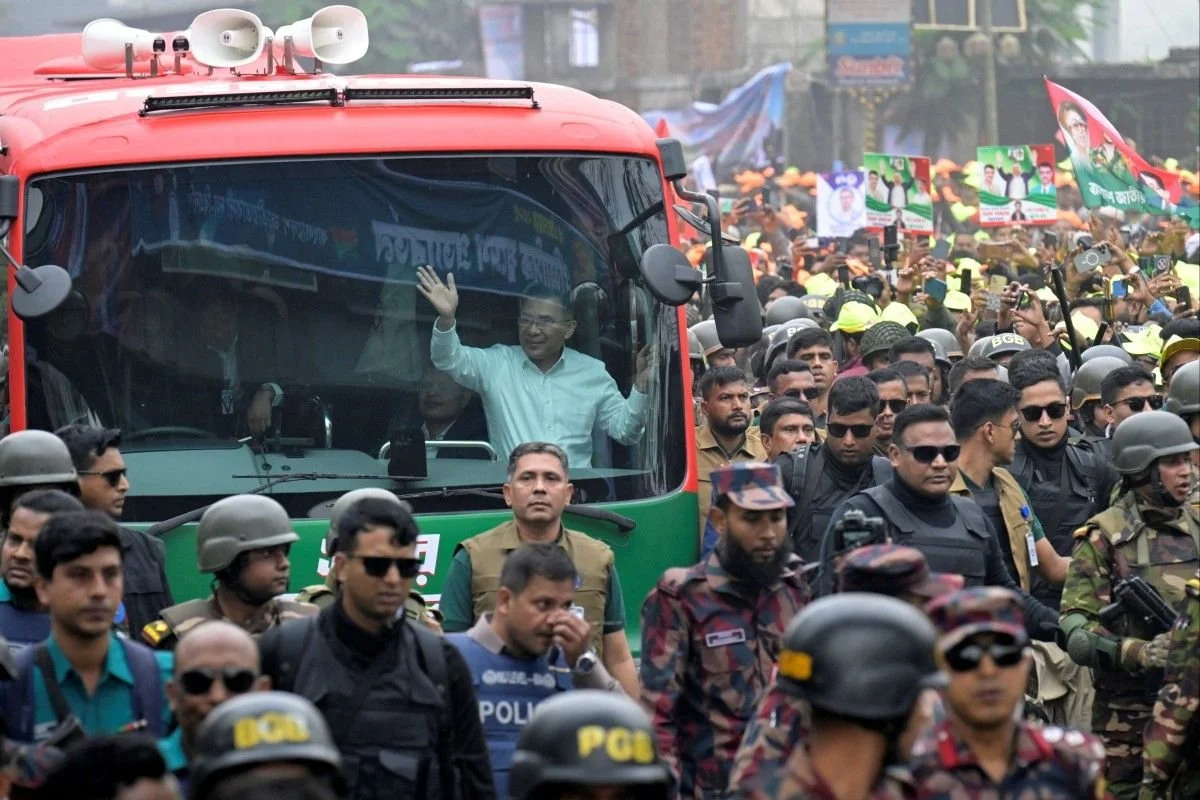
As the interregnum stumbles toward an eventual ballot, the ghost of the old guard returns. Tarique Rahman of the BNP recently returned to Dhaka, addressing a crowd of thousands. In a moment eerily mirroring, yet contrasting, Martin Luther King Jr.’s iconic speech, “I have a dream”, Rahman said, "I have a plan." How that plan intersects with a fractured society, an impatient military, and emboldened Islamist factions will determine the fate of the Second Republic. Part 3 loading soon.
