
Bihar (Vihara) etymologically historically denoted a monastery or abode where Buddhist monks, scholars, travelers from across South Asia (particularly from China, Korea and Southeast Asia) served as an international hub for scholars and ascetics. In contrast, contemporary political discourse often reduces the region to structural fragility, outward labor migration, governance deficits, and pejorative socio-cultural stereotypes.
Ironically contemporary political realities are a story of migrants, a story where construction of infrastructure stands with many collapses. A story where vulgarity of Bhojpuri songs are too political. A remark of Jungle Raj and Identity perceived informally as abuse.
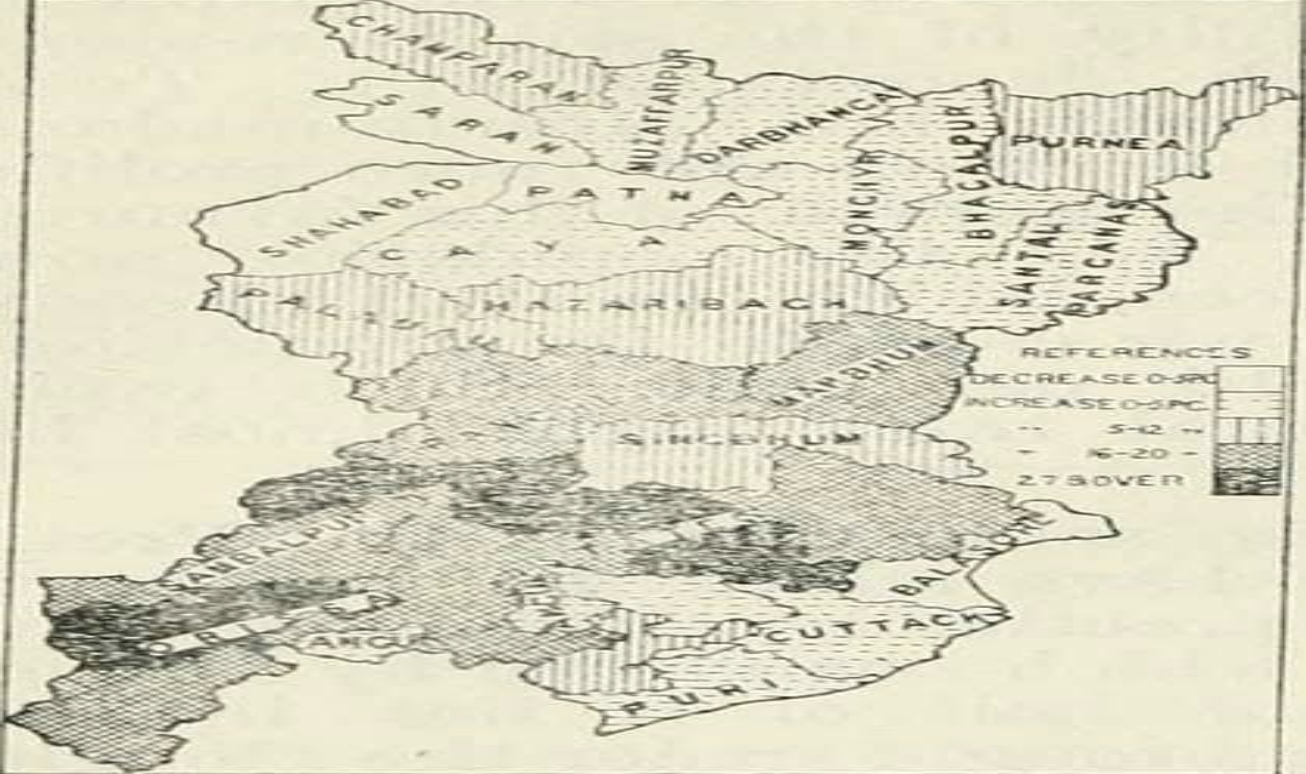
Bihar is a collusion of stories of political history unfolding in many facades, all colliding in influx and conceived chaos and way after.
For the vast majority of documented Indian History, Bihar was the absolute epicenter of wealth, political power and intellectual advancement in South Asia. Bihar was the seat of India's greatest empires. From their capital at Pataliputra (modern-day Patna), these empires controlled vast trade routes stretching from Afghanistan to Bengal. Bihar has the world's premier residential universities. Nalanda and vikramashila. These institutions attracted scholars, royalty and wealth from across China, Tibet, Korea and Southeast Asia. Positioned entirely within the fertile Indo-Gangetic plains, Bihar boasted unparalleled agricultural productivity, which funded massive standing armies, architectural wonders and thriving trade.
1.Colonial legacy-

Source- Down to Earth.
The decline of Bihar began under British rule, which treated the region primarily as an extraction colony rather than a zone of development. The replacement of traditional agrarian systems, with rigid Landlord System (The permanent settlement). Bihar thriving indigenous textile and handicraft industries were systematically dismantled to eliminate competition for British manufactured goods,.The zenith of this colonial extraction was epitomized by the infamous Tinkathia system, particularly in Champaran belt. This system effectively institutionalized absolute rural immiseration. Indigo cultivation deeply depleted the soil's natural nutrients, yielded negligible financial returns for the peasantry and directly cannibalized the lands required for essential food security
As Historian Jacques Pouchepadass notes, the Tinkathia framework weaponized state law to guarantee a captive, starving labor supply for international markets. This specific dynamic of localized agrarian torture turned Bihar into a volatile pressure cooker of rural unrest, first channelized during Champaran . Satyagraha, establishing Bihar as the birthplace of organized anti-colonial peasant resistance, but the causal condition remains stagnant.
2. Post colonial expermentations-
Though it has been 75 years and counting and it is a significant period of time, rather than moving beyond the shackles of colonial rule and thriving along with other Indian states, Bihar was unintentionally prevented through a series of policy choices.
The Freight Equalization policy was one of the single most damaging economic policies for Bihar. The policy subsidized the transportation of minerals across India. This meant a factory anywhere in India could get Bihar rich coal and iron ore at the same price as a factory located right next to the mine. Bihar lost its natural competitive advantage for industrialization, effectively subsidizing the growth of coastal states like Maharashtra and Gujarat .
By the time the freight Equalization Policy was revoked, Bihar lost the majority of mineral resources through the creation of Jharkhand.
The systemic Post-Colonial policy neglect was further exacerbated by a refusal to address Bihar's complex regional geography. While many states received central funds to build multi-purpose dams and sophisticated canal networks,
Bihar's eastern ecosystem was left entirely vulnerable to the volatile Kosi River system, historically known as the "Sorrow of Bihar". The Kosi is globally notorious for its hyper-dynamic geomorphology, frequently shifting its river bed laterally across the flat plains and destroying millions of hectares of prime agricultural topsoil.
Rather than deployment of sustainable, high capital engineering solutions to harness this water for agrarian wealth, the state was forced to rely on poorly maintained embankments, which routinely breached, converting seasonal natural geography into a predictable, annual economic catastrophe that routinely wiped out smallholder capital .
The Green Revolution of the 1960s heavily favored the western states (Punjab, Haryana) with massive irrigation investments, leaving Bihar eastern agrarian structure largely neglected and prone to cyclical destructive floodings. In parallel, a combination of caste-based political fragmentation poor governance, low literacy rates and massive population density creating a cycle of economic stagnation, when a society is Economically fragile often tries to draw its identity sometime in the past and at times in different Subaltern Identity. Various subaltern identities gradually evolved through the total Revolution of Jayprakash Narayan.
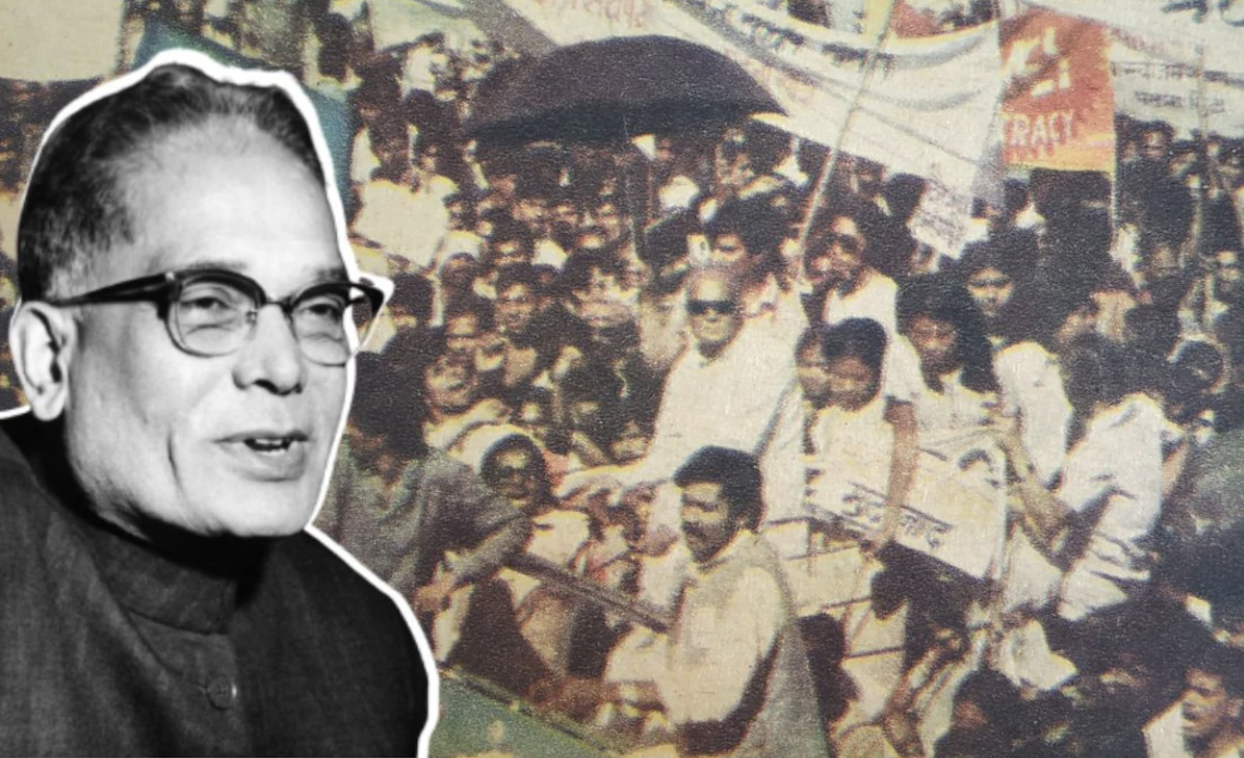
source-NDTV-JP Movement Bihar National Revolution History:
1990-2005- Sub altern politics

source-Lalu Prasad Yadav and Politics of Dignity in Bihar/outlook India.
The era spanning 1990 to 2005 in Bihar is of the most polarizing chapters in post-Independence India history. The fifteen year rule of the Rashtriya Janta dal under Lalu Prasad Yadav and through his wife, Rabri Devi - was conducted by several seismic events. The arrest of L.K Advani in Samastipur halting his Ram Rath Yatra only consolidated the MY (Muslim-Yadav) electoral equation.
Thebhurabal saaf karo Slogan- Though debated whether Lalu Yadav implicitly uttered it, the political rhetoric of his administration was crystallized in this pejorative acronym demanding Bhumihar, Rajput, Brahmin and lala (Kayastha) i.e served as an aggressive, populist call to strip the upper castes of their historical socio-political hegemony.
Rural Bihar was also engulfed and bifurcated between Upper-caste landlord militias most notably the Ranvir Sena and the Radical left wing Naxalite faction representing Dalit laborers. This resulted in horrific massacres such as Laxmanpur Massacre (1997), where 58 dalits were murdered by the Ranvir Sena, and the Senari massacre (1999), where 34 upper caste men were killed by Naxalites.
Scholars like Christophe Jaffrelot, in a Silent Revolution, view Lalu Prasad part of broader rise of the lower castes in North India, arguing that lalu achievement was more cultural and psychological than material . Political scientist Shaibal Gupta noted that the RJD regime inverted the traditional hierarchy , the visible degradation of upper caste power in everyday life for the sub-subaltern form of justice.
Conversely, economists and public policy experts present a grim view of the administrative collapse. A highly cited study by the Institute of Development Studies notes that the deterioration of Bihar between 1990 and 2005 was unique because the state leadership knowingly undermined bureaucratic capacity. Scholars point out that he(Lalu )viewed the formal bureaucracy as an instrument of upper-caste oppression To disarm it, he deliberately kept thousands of public sector job vacancies (teacher, doctors, engineers) rather than appointing qualified individuals who, due to historical education advantages, were primarily from the upper castes. This calculated hollowing out of state capacity catalyzed a structural transition from economic production to a highly predatory low-risk corporate syndicate economy. Political Scientist Santhosh Mathew and Mick Moore in state incapacity to design, observe that the deliberate neutralization of the formal bureaucracy meant the state essentially withdrew from enforcing the rule of law. In this governance vacuum, kidnapping for ransom transformed from uncoordinated underworld crime into a systemic, politically patronized extraction enterprise.
With the collapse of formal Industrial growth and a stagnant agricultural sector, capital flight reached catastrophe level. Between 1990 and 2005 Criminal Syndicate thrived with overt Political patronage. Kidnapping for ransom evolved into a highly organized low-risk enterprise that targeted doctors, businessmen and traders. This systematically destroyed the state middle class and choked out private investment, turning Bihar into a regressive political economy, while the 15 years successfully empowered the yadavas and a segment of the muslim population. It failed heavily to uplift the bottom of the socio-economic pyramids. The Extremely Backward classes and dominant backward caste simply replace backward caste. This internal contradiction eventually cracked the RJD coalition, created a new vacuum for Nitish Kumar led NDA to contest through another political engineer.
New Engineering- 2005- present.
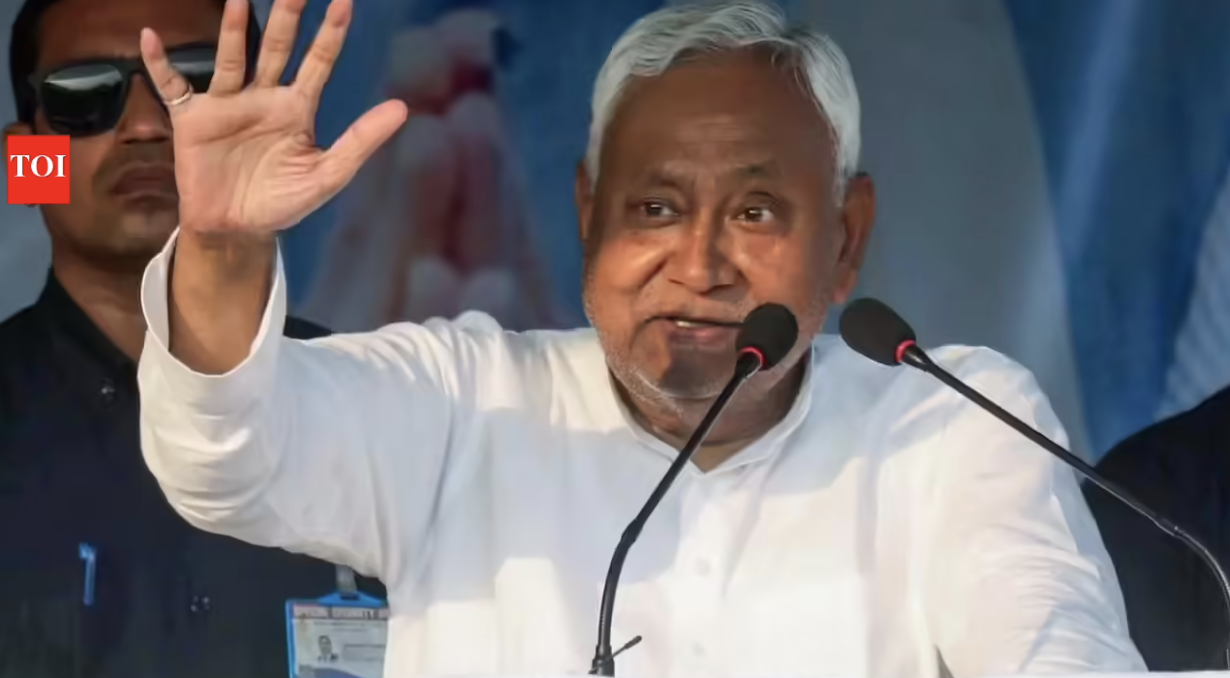
source-Rise & rise of Nitish Kumar/TOI
The developmental shift in Bihar between the 2000s and 2020 was entirely dependent on a highly sophisticated, deliberate process of political engineering. Nitish Kumar defeated the coalition built of Yadav and Muslims built by Lalu Prasad Yadav.Sanjay Kumar of CSDS and Shaibal Gupta refers to this strategy as sub-altern social engineering.
Rather than appealing to broad, monolithic caste categories, the post-2005 regime carved out two entirely new sub-categories that were historically marginalized within their own larger identity group.
EBCs – Extremely Backward Castes. Nitish Kumar isolated over 100 smaller, fragmented and asset poor-artisan and service castes eg. Teli, Kahar, Dhanuk, Nonia into Atyant Pichhra Varg.In 2006, Bihar became first state to grant 20% reservation for EBCs in Panchayati Raj Institutions (local bodies). This created a brand new fiercely loyal grassroots political leadership that completely bypassed traditional OBC dominance.
Mahadalits – Similarly, within SCs, the Paswan community held dominant political and social sway. The state government formed the Mahadalit Commission, classifying 21 out of 22 Dalit sub-castes (like Musahars, Bhuiyas, Chamars, Ravidas) as Mahadalits, the "Poorest of the Poor".
Perhaps the most revolutionary piece of political engineering in this phase was the conscious creation of a trans-caste gender vote bank.
Historically, women voted along the lines dictated by the male patriarch of the household. The state systematically broke this by creating spaces of financial and political agency. Bihar introduced 50% reservation for women in Panchayats and urban local bodies in 2006. Suddenly tens of thousands of rural women held formal political offices. The mass scale of Jeevika Self Help Groups (SHGs) organized over 1 crore rural women into a cohesive economic unit. Where these women met to discuss finance, they also formed a powerful independent voting bloc. The implementation of absolute alcohol prohibition in 2016 was a direct political payload delivered to this female constituency.
To dent the solid Muslim-Yadav (MY axis), the ruling coalition tapped into the class and caste division within the minority community. They championed the cause of Pasmanda Muslims against the Ashraf (upper-caste) Muslim leadership.
Political Scientist Jeffrey Witsoe points out that while these marginalized groups gained symbolic and descriptive representation, they lacked the actual structural capital to challenge the deeply entrenched upper-caste bureaucracy. Power shifted from dominant political politicians not to the sub-alterns, but to Civil Servants. Alongside it made the politics hyper-fragmented forcing political actors to rely on volatile shifting arithmetic coalitions rather than cohesive, ideologically driven policy mandates.
These political engineering led to the growth of targeted platform of *Sushasan* (Good governance) against political & institutional stagnation. Economically, Bihar transitioned into a high growth phase, often posting double-digit GSDP rate averaging 10.5% between 2005 and 2015, before moderating to around 7% toward 2020.
The late Shaibal Gupta (founder of ADRI, Patna) argued that post-2005 Bihar witnessed a "reconstruction of the state". The government successfully re-established the monopoly of law and order, which acted as a prerequisite for development. Arvind Panagariya noted that massive public capital expenditure on roads and bridges broke the physical isolation of rural pockets, integrating local markets with the formal economy.
Political scientists argue that while the post-2005 regime successfully subdued overt caste-based violence, it created a new bureaucratic state. Conversely, development economists like Jean Dreze highlight that while Bihar infrastructure expanded, its structural human development indicators lagged severely behind national standards.
High GDP growth did not translate into proportional poverty reduction. Moreover, the state continues to anchor the bottom of Niti Aayog Multi-dimensional Poverty Index. Prabhat Patnaik observed that the growth was largely driven by construction and public administration (consumption led) missing a robust manufacturing engine.
Bihar and people from Bihar remains at a major political juncture, as by 2020, the novelty of the sub-altern categories began to experience fatigue as economic realities of pandemic, massive youth unemployment, and lack of industrialization proved that political engineering could effectively win election, it could no longer mask the structural limitation of the state economic model.
Bihar is still a heavily agrarian state and employs nearly 80% of the workforce, yet it contributes dismally to the total GSDP. This is driven by acute land fragmentation, where over 90% of farmers are marginal, operating on less than 1 hectare. Furthermore, the abolition of the APMC Act in 2006, did not successfully trigger private investment in cold chains or market infrastructure as originally hypothesized. Despite successive Industrial promotion, large scale manufacturing clusters remain virtually non existent.
In these political fiasco, one of the biggest dent was the overall identity of Biharis which is a cautious concern. Where Biharis, who moved for basic employment and subsistence, were considered outsiders within their nation. They are often abused, called slurred and mocked on social media.
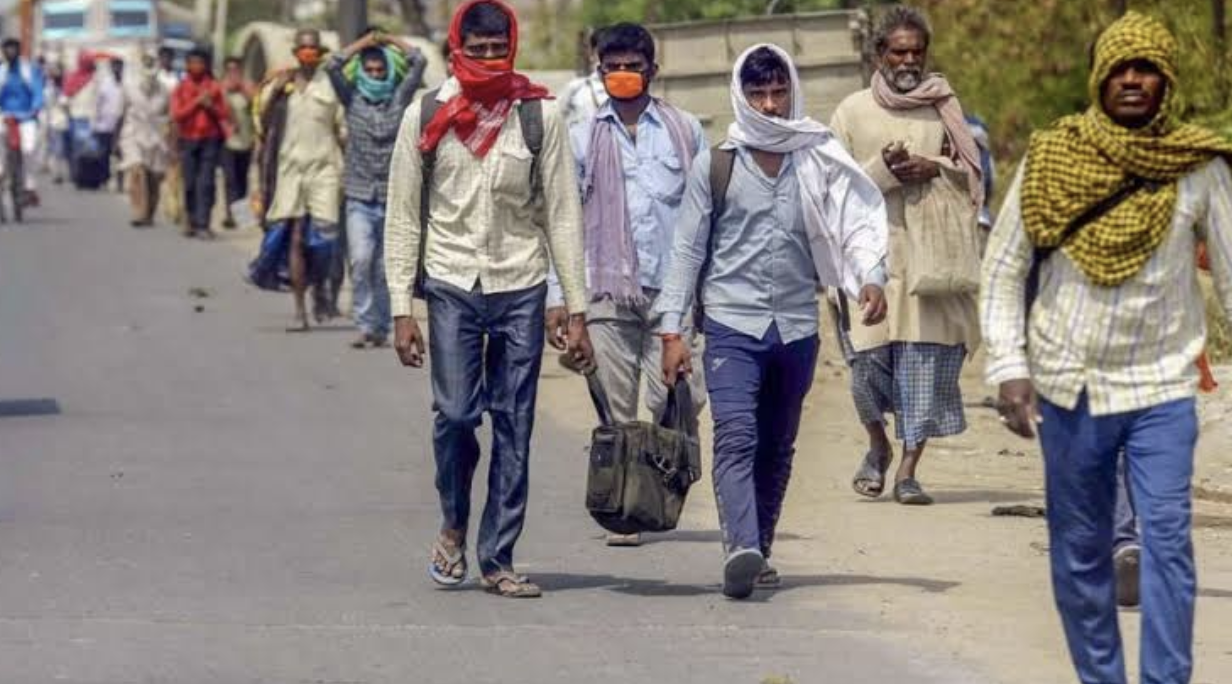
source-Bihar: Migrant Workers Struggle to Return to Work After Chhath as Trains are Packed | NewsClick
When people lose economics they often pivot to ancients to be proud of. People of Bihar too, rather than questioning the realities, took a lot of pride in the past. Which ironically favors non questioning.
Ultimately, the post 2005- Bihar model proved that a committed political leadership could pull a deeply fractured state out of an administrative collapse through infrastructural spending and targeted social engineering. However, the model reached its structural ceiling by 2020, without a strategic long term developmental success dependent on transitioning away from raw resources and labor extraction toward a value added asset owning economy.
References
Cornwallis, C. (1793). Proclamation of the Permanent Settlement of Bengal. Bengal Code of 1793. Government of British India.
Government of India. (1952). The Freight Equalization Scheme. Ministry of Railways and Commerce, Government of India.
Jaffrelot, C. (2003). India's Silent Revolution: The Rise of the Lower Castes in North India. Columbia University Press.
Jha, H. (2022). Interrogating Settled Terrains of State Capacity: Explaining Governance Reforms in a Low-Capacity Milieu. The Journal of Indian and Asian Studies, 03(01). https://doi.org/10.1142/s2717541322400046
Mathew, S., & Moore, M. (2011). State Incapacity by Design: Understanding the Bihar Story. IDS Working Papers, 2011(366), 1–31. https://doi.org/10.1111/j.2040-0209.2011.00366.x
Cited by: 96
Mukherji, A., & Mukherji, A. (2012). Bihar: What Went Wrong? And What Changed? (Working Paper No. 2012-107). National Institute of Public Finance and Policy.
Prasad, P. H. (1987). Political Economy of Economic Backwardness in Bihar. Economic and Political Weekly, 22(23), 13–19.
Sinha, A. (2005). The Regional Roots of Developmental Politics in India: A Divided Leviathan. Indiana University Press.
