
India’s Examination Crisis: Paper Leaks, Public Trust and the Indian Examination System
The competitive examination system in India is one of the largest and most rigorous in the world. Millions of students sit for entrance and recruitment tests that determine admission to universities, medical schools, engineering institutes, law schools, and government positions every year. For many families, these examinations are not only tests, but they are also ways to financial security, social mobility and dignity.
However, the discussion about examinations has evolved. Previously, the talk was largely about the difficulty of the syllabus, coaching culture or reservation policy. Another issue that is dominating the public discourse today is paper leaks, mismanagement of exams and loss of trust in the examination agencies.
Students' frustration is not just due to the difficulty of the exams. This is because many people now believe that making an effort no longer necessarily equates to fairness.
The Rise of National-Level Entrance Examinations in India
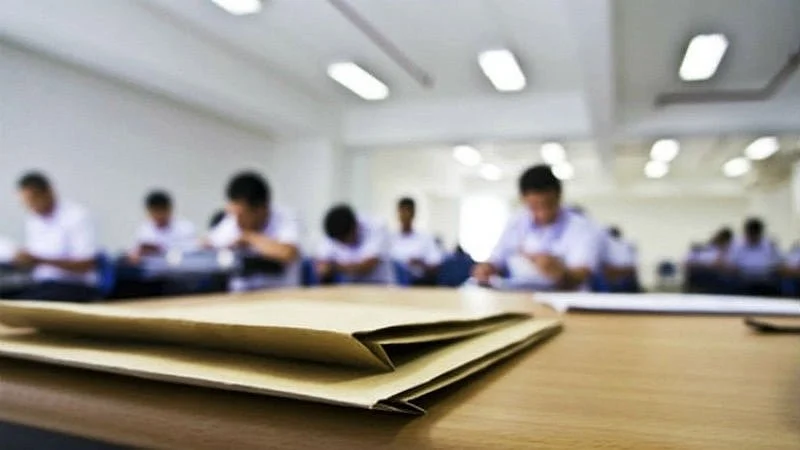
India slowly shifted towards a centralised entrance examination system with the aim of developing a uniform and merit-based system.
The Joint Entrance Examination (JEE) is a test that started in a narrower form in 2002 and is an offshoot of the previous tests, such as IIT-JEE and AIEEE. It was meant to establish a single engineering gateway.
National Eligibility cum Entrance Test (NEET) was introduced in 2013 and was implemented throughout the country from 2016. Before NEET, admission to medical courses was based on AIPMT and various state/private college exams.
Likewise, the Common Law Admission Test (CLAT) was launched in 2008 to streamline admission to the National Law Universities. Before the introduction of CLAT, each law university used to hold its own entrance exam.
The centralised testing model was extended by other large-scale exams like CUET for admission to universities and UGC NET for the eligibility of lectureship and research fellowships.
The rationale for these reforms appeared to be good:
• one nation-level examination,
• less stress on various types and modes of transport,
• standardized evaluation,
• and allegedly increased transparency.
However, the greater the size of the system grew, the more it became vulnerable.
The Growing Fear of Paper Leaks
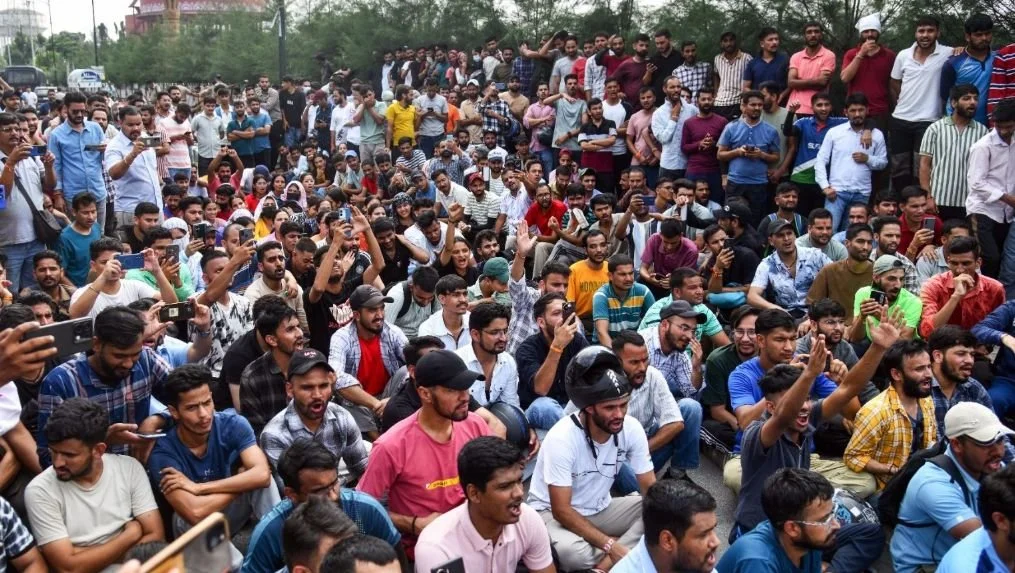
Paper leakage is no new phenomenon in India. Cheating networks, proxy candidates and leaked question papers have long been accused of being involved in recruitment examinations and state-level tests. But, in the last few years, the anger became more prominent when even the national exams began to be questioned.
One of the largest examples was NEET.
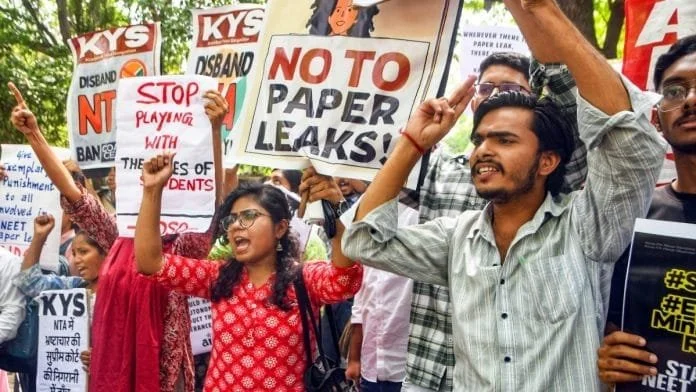
During the AIPMT 2015 leakage controversy, the medical entrance system was at the centre of the controversy, causing the cancellation of the exam and a re-examination. Later, NEET 2024 caused widespread protests and discussions about paper leaks, anomalous score distribution, the granting of grace marks, and the integrity of the examination.
The National Testing Agency (NTA), which conducted a number of important exams such as NEET, JEE Main, CUET and UGC NET, faced a lot of criticism.
Students expressed concerns about technical glitches, server failures, delayed schedules, answer key disputes, normalization issues, transparency problems, and allegations of irregularities. The government also announced that the integrity of the UGC NET June 2024 has been called into question and it was subsequently canceled. The delayed exams, lack of management, and confusion over normalisation in CUET UG and PG exams have also been criticized.
The recruitment agencies at the State level were accused of leaks and irregularities time and again, especially the Staff Selection Commission (SSC) and Uttar Pradesh Subordinate Services Selection Commission (UPSSSC). There were significant controversies in SSC CGL 2018, with students alleging that the exam was leaked and manipulated. UPSSSC exams like PET and Junior Assistant recruitment tests were also accused of leaks and paper cancellation.
This cycle repeats itself and has a harmful psychological impact: Students start to think that it is possible that hard work is not sufficient. When public trust is eroded, even honest examinations begin to seem shady.
Why is UPSC looked at differently?
In the midst of these debates, one examination always makes the rounds of public debate as a comparison: the Union Public Service Commission (UPSC) Civil Services Examination. The UPSC Civil Services Examination was formed in the year 1926, and it has never been confirmed to be leaked in the history of the UPSC.
This frequently raises an intriguing question:
Why is it that it is easier to see leaks in some examinations than UPSC's?
It is important to consider both the institutional structure and the nature of the examination itself. The UPSC is constitutionally recognised and has institutional autonomy. It undergoes several stages of confidentiality, secure printing mechanisms, limited access to question papers, sealed transport mechanisms and limited outsourcing.
But the type of test is as important as the security, however. The UPSC is not a mere memory test or objective test.
The Civil Services Examination tests:
• analytical ability,
• interpretation,
• writing structure,
• critical thinking,
• clarity of expression,
• ethical reasoning,
• and personality.
Even if someone did somehow get access to questions beforehand, they would still need years of preparation, practice writing answers, and conceptual understanding in order to be successful.
That's why it is said on social media that:
“Even if the UPSC paper leaks, many people will not be able to write the answers.”
The meme might sound funny, but it's a truth that's worth noting.
It is not only knowledge that makes UPSC a challenge, but also articulation.
The JEE Meme and Technical Difficulty.
There's another popular meme:
“Even professors find it difficult to solve the questions if the JEE paper leaks.”
Again, there is a true observation behind the humour.
JEE Advanced is particularly known for testing:
• conceptual clarity,
• advanced mathematical reasoning,
• speed under pressure,
• and problem-solving ability.
A lot of questions are set to be tricky and challenging, and may take a long time to complete.
In Physics, Chemistry and Mathematics, students who are preparing for the JEE exams can master the concepts after going through years and years of practice. So the punch-line of this joke is that just having the paper is not enough to be successful because problem-solving is hard.
UPSC vs JEE highlights that Indian exams reflect that there are various types of intelligence, each measured by different exams.
UPSC tests depth of understanding, analytical thinking and communication. JEE requires technical reasoning, accuracy and speed.
The main reasons are that NEET is all about precision, conceptual understanding, and fierce competition due to the large number of candidates competing for a limited number of seats. Hence the difficulty of the exam cannot always be judged just by the size of a syllabus or the difficulty of the questions alone.
The Crisis of Over-centralization
A main criticism that is coming to light now is that India is too reliant on a few central examinations. The fate of lakhs of students is now dependent on a single paper. This puts an incredible strain on the pressure. If there is a small irregularity in a nationwide examination with millions of candidates, the repercussions are nationwide. A glitch in the system touches thousands. Trust is lost at the blink of an eye when there's a paper leak. The panic spreads across states due to a normalisation controversy.
Students have been asking more questions about whether one exam has so much influence on one's life or career. This apprehension takes on greater meaning in a country of inequality. Not every pupil has stable internet access, expensive coaching, quiet study spaces, or financial security. But they all have to play in the same high-pressure arena.
Possible Alternatives and Reforms
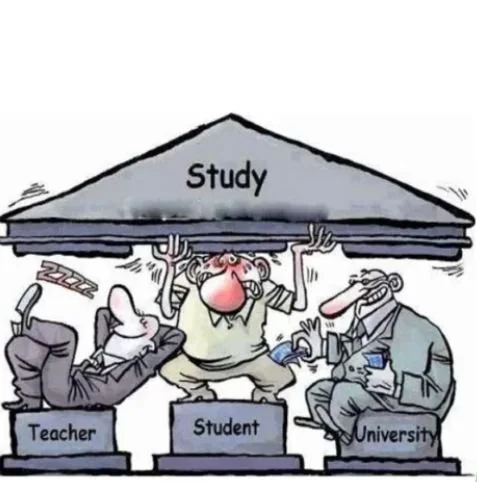
Comments are no longer the only subject of public discussion; alternatives are now also a discussion topic.
There are several proposed reforms.
1. Multiple attempts per year.Several attempts per year.
Students would take several examinations each year, but the highest score would count for each student. This will help to ease the psychological burden and reliance on only one day.
2. Hybrid Admission Models
It is recommended to mix:
• entrance examination scores,
• school performance,
• interviews,
• aptitude tests,
• and continuous assessment.
This can help to make a more even assessment system.
3.Strengthening Universities
The pressure of competition is really huge with India's excessive reliance on a handful of top institutions. If the state universities and public universities improve their quality, students may not feel that they must rely on one examination for their whole life.
4.Enhanced Cybersecurity and Audits
Highly advanced digital security systems, clear auditing systems and quick grievance redressal systems are what examination agencies need. Trust is not only based on fairness, it's based on accountability that is visible.
5.Independent Regulatory Oversight
There is a suggestion of setting up a separate body to regulate exams, a body away from agencies such as the NTA. This supervision may help to increase transparency and minimize conflict of interest.
Beyond Exams: The Human Cost.
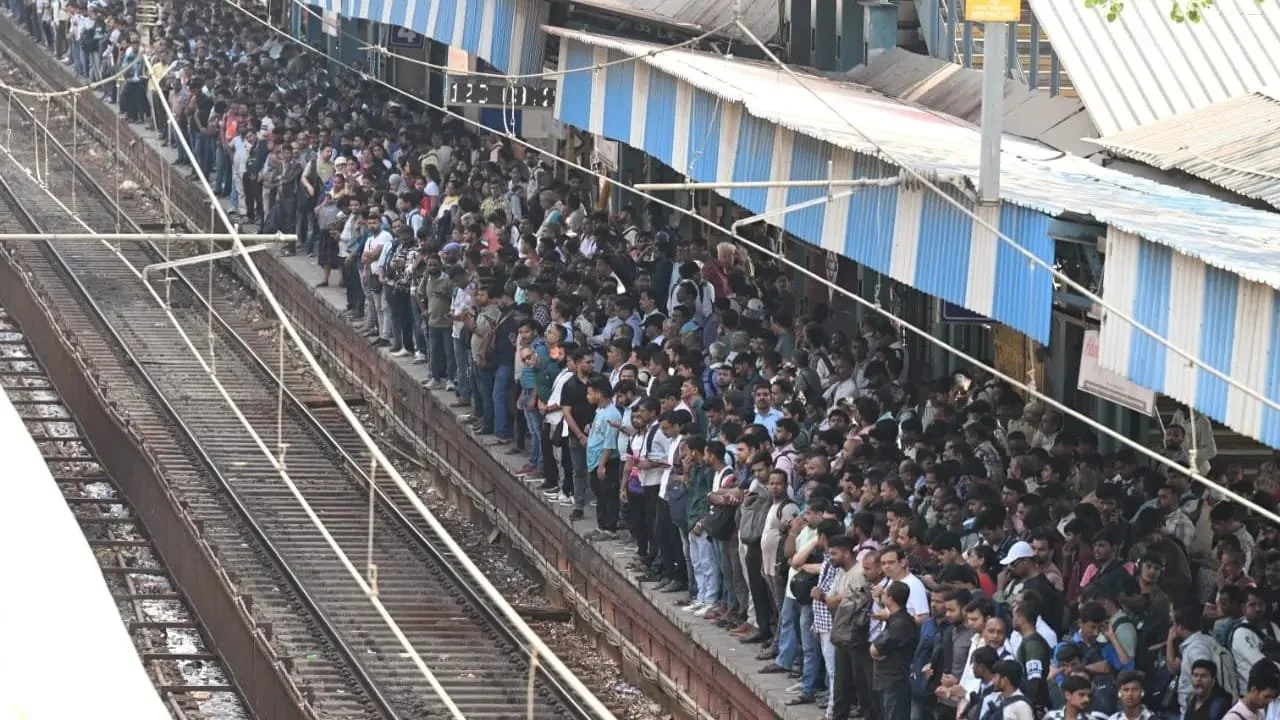
The emotional stress that examination culture inflicts on India is perhaps the most worrying. Pupils prepare for years at a time without interacting with others. Families save money, have high expectations and place hope in these exams. After all, if things go wrong, the consequences are not strictly administrative. It gets very personal.
For many aspirants, examination controversies bring about anxiety, helplessness, anger, burnout, and loss of motivation. A paper leak isn't just a “news event.” It can be a betrayal for the student who has studied diligently for many years. Which is why examination integrity is so vital to a democracy. Just as faith in examinations is faith in fairness itself.
What can India learn from different countries?
China: Fear-Based Deterrence
China responded to exam leaks through aggressive legal and technological enforcement. Organizing cheating or selling papers can lead to prison sentences, while facial recognition, GPS tracking, drones, and AI surveillance protect examination systems. China’s model treats examination integrity as a matter of national security.
South Korea: Extreme Administrative Discipline
South Korea adopted strict isolation protocols for its Suneung examination. Paper setters are cut off from the outside world for weeks, and the entire country adjusts logistics on exam day to ensure smooth conduct. The system reflects how seriously public trust in examinations is treated.
United Kingdom: Digital Security and Independent Oversight
The United Kingdom strengthened exam integrity through encrypted digital distribution and independent regulation by Ofqual. Instead of relying entirely on physical paper movement, the UK reduced vulnerabilities through technological modernization and external auditing.
Vietnam: Reducing Pressure Itself
Vietnam responded differently after major scandals by restructuring admissions. Universities were allowed to consider interviews, academic records, and language certificates alongside exam scores, reducing dependence on one high-stakes test.
India may not replicate any single model completely, but these examples reveal an important lesson: lasting reform requires not only stricter security but also rebuilding trust by reducing excessive dependence on one examination to decide an entire future.
Conclusion
The examination system in India is at a crossroads. On one side, there's the ideal of meritocracy: that opportunity should be given based on talent and hard work, regardless of background. On the other side is public mistrust due to leaks and mismanagement, as well as competition and institutional failure.
The UPSC, JEE, NEET, CLAT, CUET, SSC, and UGC NET exams are more than just tests; they are a journey of discovery. They influence careers, identities and future. These memes about UPSC and JEE seem funny, but in essence, they show the mindset of the students in relation to these systems:
UPSC is a struggle of analysis.
• JEE is an indicator of intellectual intensity.
• NEET represents hyper-competition.
And paper leak controversies are a fear of the erosion of fairness. The biggest challenge that faces India is not just conducting exams. It's maintaining public trust. Once students start to think that hard work isn't necessary, it's no longer a crisis; it turns into a social, political and moral. But a country cannot afford to lose the trust of its youth.
