
India’s Employability Crisis!!
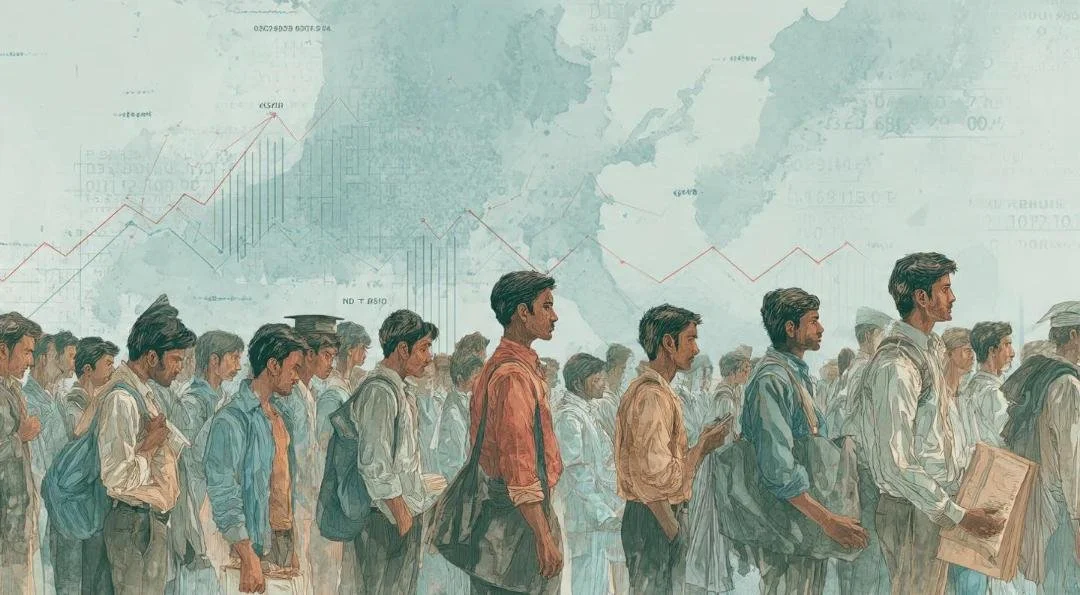
India’s Employability Crisis: When a Demographic Dividend Risks Becoming a Demographic Disaster
For years, India’s youth population has been described in triumphant language. Politicians call it the “strength of New India.” Economists describe it as a once-in-a-century demographic opportunity. International institutions repeatedly emphasize that while much of the developed world is ageing, India remains young.
The optimism seems to be warranted statistically. Almost two-thirds of India's population is less than 35 years old, and the working-age population is projected to be the majority till about 2055. Theoretically, this should give India just what it needs to become an industrial and economic power like South Korea, China, Singapore and Germany.
However, there is a growing sense of unease behind the festivities: What do you do when millions of educated young people enter an economy that cannot offer them a meaningful, stable and dignifying job?
This is the essence of the employability issue in India.
The question now is not of India's population. It is whether India has developed the economic, educational and institutional environment to transform those into useful human resources. Because the demographic dividend is not an automatic outcome of population growth. It is a policy product. History teaches that if states don't take in their young, their demographic energy can quickly turn into social frustration, political anger and democratic instability.
The illusion of “Low Unemployment”
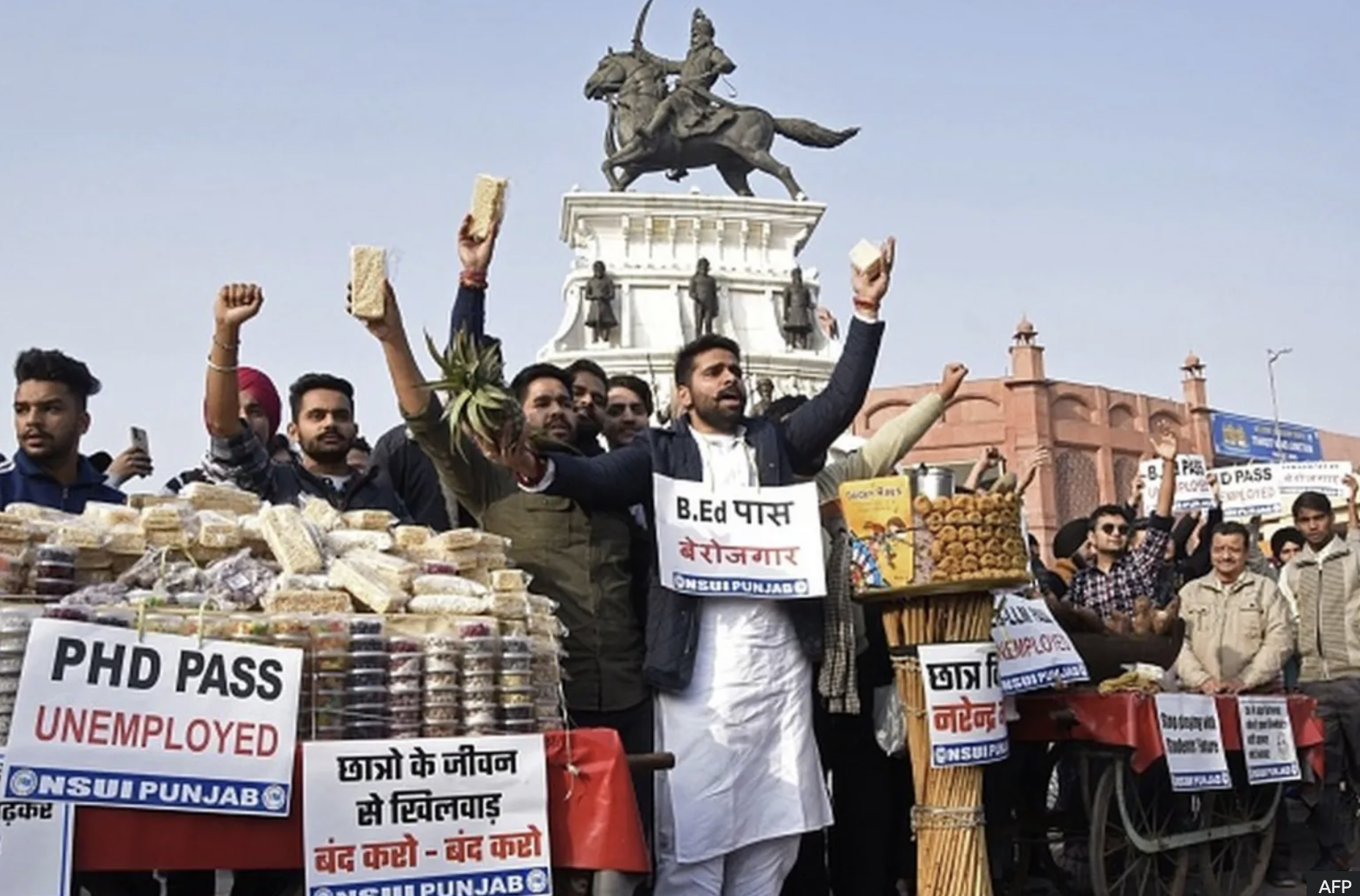
The most pervasive misperception in the employment problem in India is the very fact of the statistics of unemployment. The unemployment rate in India had been around 2.5–2.6% in the international data for years, during the late 1990s to mid-2010s. Recent estimates (even with models) put the unemployment rate in India at around 2-3%.
This, on the surface, seems very low, particularly in comparison to the levels of unemployment in the economies of Europe (between 7-10%). However, this comparison is very misleading because the labour market in India is very different from the one in the advanced welfare economies.
If social security systems are robust, it is possible for individuals to be openly unemployed and actively looking for work in countries with such systems. Most people in India cannot afford to be jobless. Economic activity is a prerequisite for survival itself. Consequently, individuals go into informal labour, temporary work, unpaid family labour, low-productivity agriculture, street vending, gig work, or precarious self-employment.
From a technical point of view, they are considered “employed.” Many are still not confident in their economic status, not well paid and not fully utilised.
That is why the problem of unemployment in India is not just the lack of jobs, but:
underemployment,
disguised unemployment,
and informal survival employment.
A man who works for twelve hours a day without insurance, pension or long-term security is a statistic. But whether he is a success story in economic development is another matter.
These realities were further highlighted after the introduction of the Periodic Labour Force Survey (PLFS) in 2017. Unemployment was estimated at around 6% in 2017-18 (a much higher figure than previously estimated) and then slowly fell in subsequent years, according to PLFS data. Most importantly, it highlighted the high rates of educated and youth unemployment.
This is very significant because structural problems can be masked by aggregate unemployment rates.
The problem of Educated Unemployment
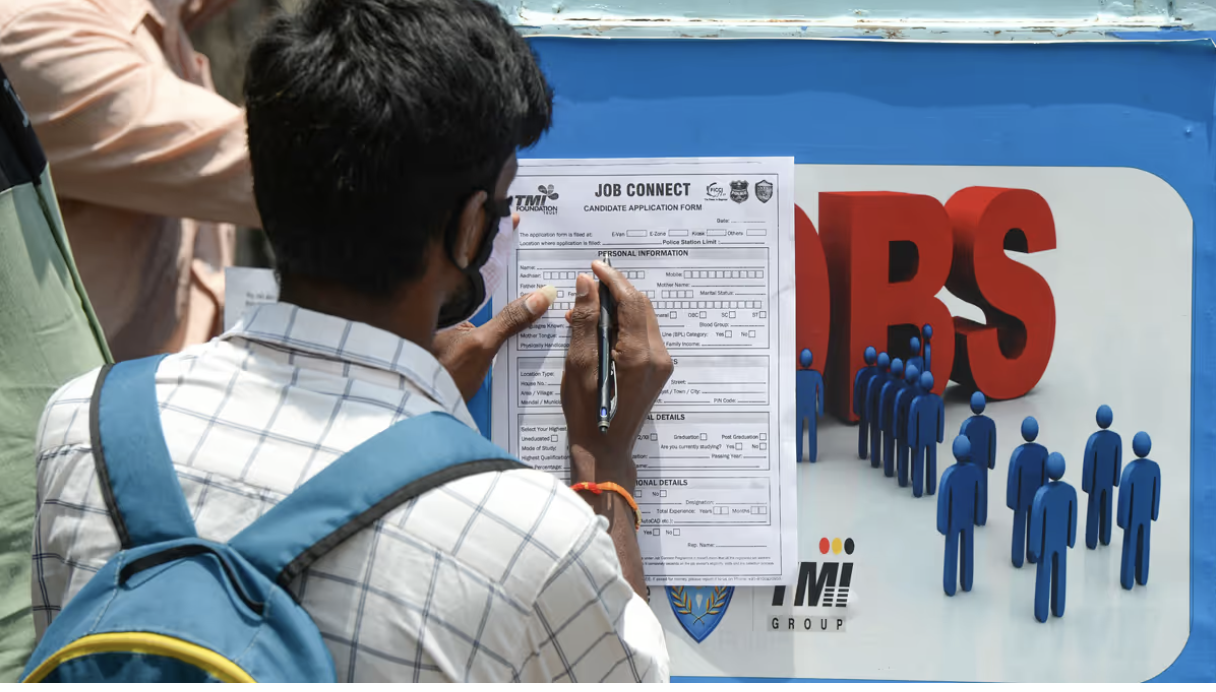
The paradox that India today is in is seldom discussed candidly: The employment rate has been growing at a slower rate than education.
In the past 30 years, the number of schools, colleges, engineering institutes and universities has grown significantly. Millions of first-generation learners started college with the expectation that college would lead to upward mobility. However, there were not enough quality jobs created to absorb them.
This has led to a growing mismatch between the number of graduates and jobs in India. This phenomenon can be observed all over:
engineers taking railway clerical examinations,
postgraduates who are applying for peon posts,
Students who are taking PhD exams for lower division government jobs,
millions of people bidding for a few safe and secure public sector positions.
Unemployment is not the only problem. It's aspirational collapse.
Educational experiences shape people's vision for their future. A degree is associated with higher expectations of dignity, income, lifestyle and social mobility. If the labour market is unable to deliver on those expectations, it is not only economic, but also psychological, that frustration sets in.
That is why educated unemployment is more dangerous than poverty alone politically. The poor person may suffer materially, and the uneducated, unemployed person suffers materially and symbolically. They feel what sociologists call relative deprivation, that they were promised mobility, but it didn't materialise.
This crisis is evident in the emergence of coaching-centre economies in India. Whole urban ecosystems now spin around young people, who are constantly preparing for competitive exams, which are considered one of the few ways to secure a job in the state.
This is in many respects a symptom of a deeper institutional issue: India's developmental model has grown credentials at a much faster rate than capacities.
The Employability Gap
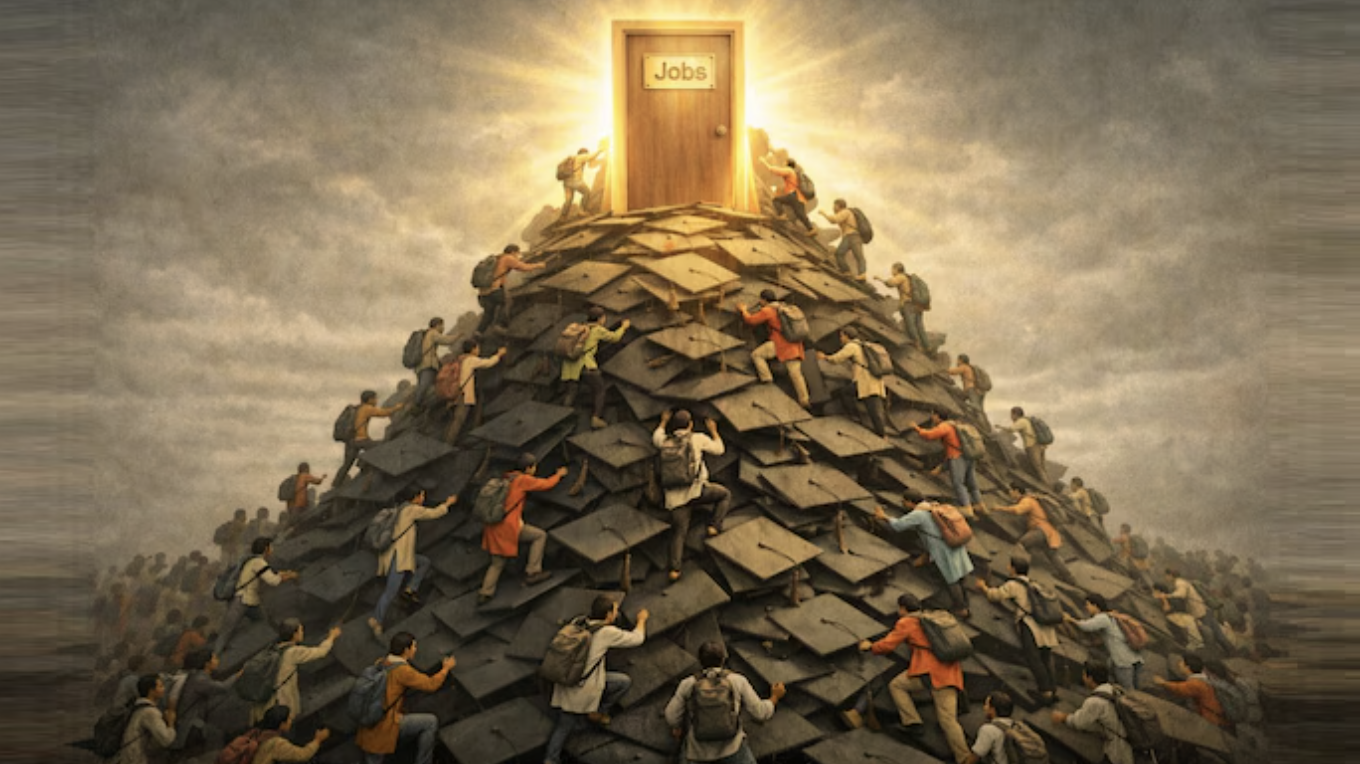
The issue of graduates not being “industry-ready” is a recurring theme in the complaints of employers in all industries. It is estimated that only about 42-55% of India's graduates are fit for the modern sectors, according to surveys.
It does not imply that young people are not intelligent or have potential. Instead, it shows the mismatch between education and employment. The majority of the Indian education system is still based on:
rote memorization,
exam performance,
theoretical curriculum,
and passive learning.
In the meantime, employers are increasingly looking for:
communication skills,
analytical reasoning,
digital literacy,
teamwork,
adaptability,
and practical problem-solving.
The outcome is a huge skills-jobs mismatch.
Universities tend to offer graduate degrees, and industries look for skills.
This is even more hazardous in the era of artificial intelligence and automation. Traditionally, countries industrialized first and automated later. India is at risk of automating too early for a large industrial workforce.
AI systems are increasingly taking over routine clerical tasks, repetitive manufacturing, customer support and entry-level white-collar roles.
This presents a very frightening scenario: India could miss out on low-skilled jobs while it is still struggling to generate sufficient high-skill jobs.
Growth Without Jobs
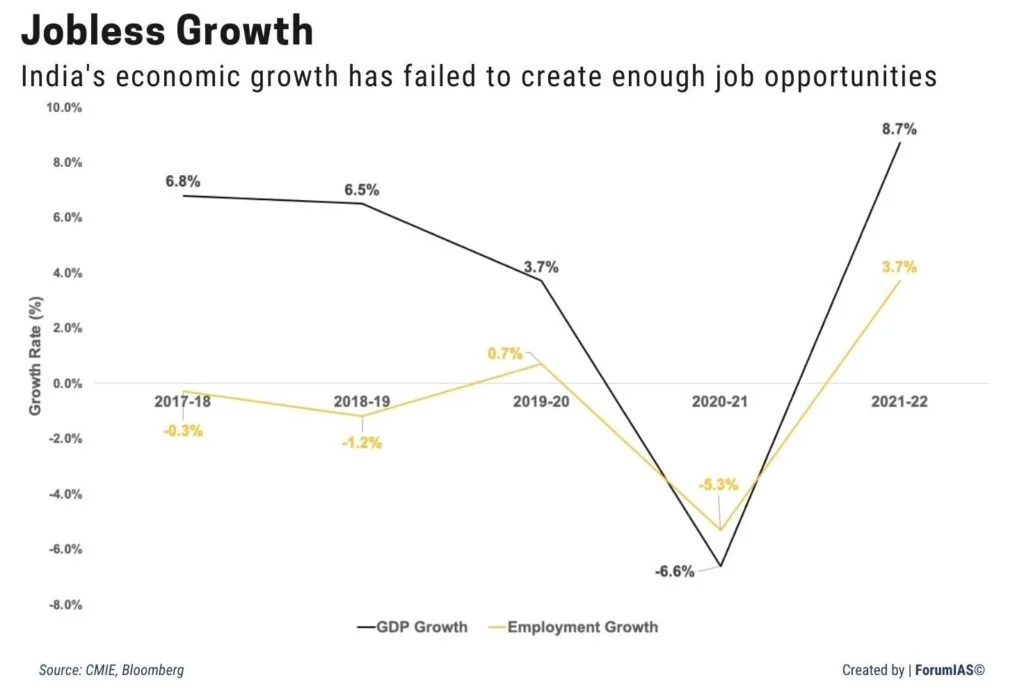
The economic growth story of India, since liberalization, is undeniable. GDP grew at a fast pace, infrastructure developed, technology industries thrived, and India became a global powerhouse in the digital space.
However, employment creation always trailed growth. This phenomenon, dubbed “jobless growth,” was the result of India's growth being mainly in capital-intensive sectors, not labour-intensive manufacturing.
In the past, millions of people were taken in by factories in the East Asian economies and later moved into the high technology sectors. But in India, the movement towards services was rapid, without a wide manufacturing base to provide jobs for semi-skilled workers.
Consequently, high-skill sectors grew, elite urban opportunities expanded, but mass employment generation remained weak. Instead, the informal sector took up the surplus labour.
Today, almost 90% of India's labour force is engaged in informal or semi-formal employment. Most lack social security, stable contracts, pension systems, healthcare protection, or a longer term of wage stability. As a result, even employment can be a lack of economic dignity.
Gendered Exclusion from the Dividend
India's demographic dividend is also incomplete, as millions of women are still not participating in formal employment.
Although there has been an improvement in female education, the overall participation rate in the labour force among females is still relatively low. Women continue to be restricted in their participation due to cultural restrictions, unpaid care responsibilities, workplace safety concerns, wage disparities and lack of childcare facilities.
Believe it or not, women are more educated than they ever were, but less economically visible. Many women end up leaving the workforce after marriage or are limited to unpaid domestic work, and are not seen as economically active, even though they support households and the community.
This generates what can be termed a “partial demographic dividend” – that is, half the productive potential of the population is not being used. A country can't take the best advantage of its demographic dividend and systematically exclude women from economic participation.
Regional inequality and internal migration dynamics
The regional dimension of India’s demographic transition also carries profound constitutional and federal implications. Southern states such as Kerala and Tamil Nadu, which achieved lower fertility rates, stronger public-health systems, and higher human-development indicators earlier, are now ageing faster and contributing disproportionately to India’s tax revenues and skilled workforce. Meanwhile, younger northern states such as Bihar and Uttar Pradesh continue to experience rapid population growth but weaker educational and industrial infrastructure.
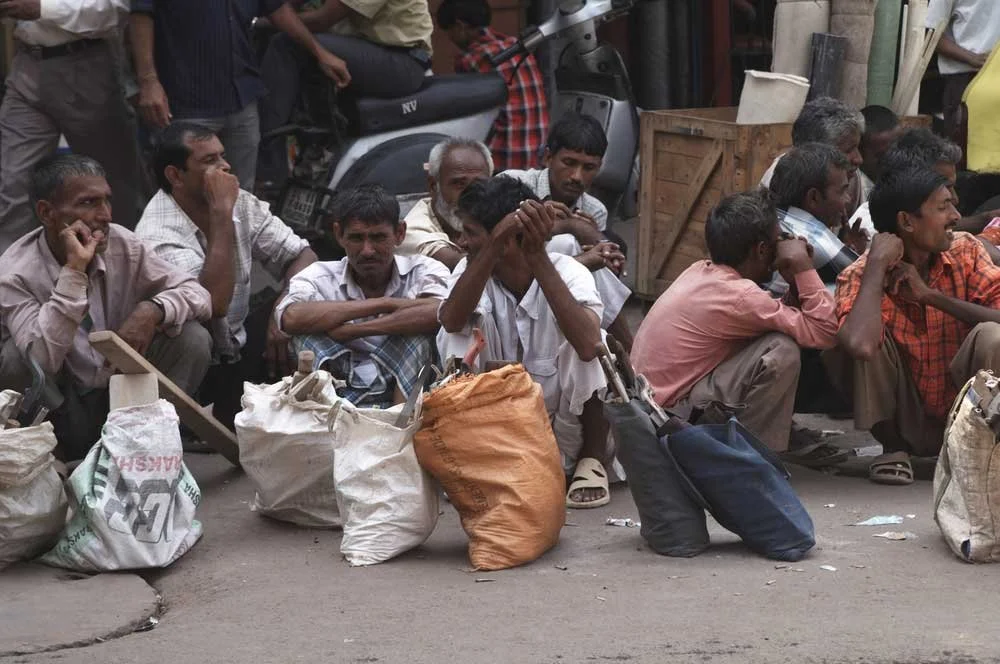
This imbalance in structure is the weakest in the employability ecosystems found in the regions with the youngest populations. Internal migration is heightened as opportunities continue to be concentrated in metropolitan centres. Youth are migrating from villages and small towns to look for jobs in cities, already facing issues of housing shortages, urban congestion, informal settlements, and infrastructure stress.
Unemployment is then linked to larger issues of urban administration, federal growth, and regional disparities.
This divergence creates tensions within Indian federalism itself. Questions surrounding central tax devolution, welfare allocation, and future parliamentary seat delimitation increasingly intersect with demographic realities. Southern states often argue that they are being comparatively “penalised” for successful population stabilisation, while northern states continue demanding larger developmental support due to demographic pressure.
Thus, the employability crisis is no longer merely a labour-market issue; it is gradually becoming a structural challenge for India’s federal balance, political representation, and long-term governance architecture.
International Lessons
International experience demonstrates that demographic dividends are not produced by demographics alone; they are created through institutions. Countries that successfully converted youth populations into economic assets built strong links between education systems, industrial policy, labour markets, and welfare mechanisms.
Germany's dual apprenticeship model integrated classroom learning with firm-based training, ensuring that students entered the labour market with practical experience rather than merely academic credentials.
Scandinavian countries adopted "flexicurity" systems that combined labour-market flexibility with generous social protection and continuous retraining.
Meanwhile, East Asian developmental states such as South Korea, Singapore, and later China actively coordinated industrial policy, export-led manufacturing, infrastructure development, and human-capital investment to absorb large numbers of young workers into productive sectors.
The contrast is equally instructive. Several countries across North Africa, Latin America, and South Asia expanded access to higher education without creating equivalent employment opportunities. The result was a generation of educated youth whose aspirations rose faster than economic opportunities.
This suggests that unemployment is not merely a labour-market problem but a governance challenge. Training programmes alone cannot solve unemployment if economies fail to generate sufficient demand for labour. The most successful countries treat employability as an ecosystem involving schools, industries, financial institutions, urban planning, and state capacity rather than as an isolated education policy issue.
(Soon a series on International Case studies and Youth Anger will be covered up)
Youth unemployment and its political implications
The issue of employability in India is not just economic; it's very political. The disaffection of large numbers of young people can change the culture of democracy itself. In the past, societies with highly educated but underemployed youth have been susceptible to volatility, as their aspirations are higher than the capacity of the institutions.
International experience also shows that persistent youth unemployment can have consequences extending far beyond economics. In recent decades, youth-led mobilizations and protest movements in countries such as Morocco, Peru, Bangladesh, and Nepal have often reflected broader frustrations regarding employment opportunities, economic mobility, governance, and perceived exclusion from development. While each case emerged from unique political circumstances, they collectively demonstrate how large populations of educated but underemployed young people can become powerful political actors.
That is why employability is a core state capacity matter. The inability to absorb the youth into the productive economic life of a state erodes its developmental promise over time.
Conclusion
India has come to a pivotal moment in history. It may be the source of exceptional growth or long-term instability in its demographic structure. The difference is not in the size of the population but in the quality of governance.
A demographic dividend is not automatic; it is not a given by having young people. It is the result of capability building through education, opportunity through the economy and dignity through institutions. If not, the very same youth population that is called a “national asset” could later find themselves caught between aspiration and exclusion.
Maybe that's the crux of the issue that India has to deal with:
The real problem is that young people aren't ambitious enough. But the buildings that are supposed to contain their ambition are still woefully underfunded.
References.
World Bank. (n.d.). Unemployment, total (% of total labor force) (modeled ILO estimate) – India. World Bank Open Data.https://data.worldbank.org/indicator/SL.UEM.TOTL.ZS?locations=IN
World Bank. (n.d.). Unemployment, total (% of total labour force) (national estimate) – India. World Bank Open Data.https://data.worldbank.org/indicator/SL.UEM.TOTL.NE.ZS?locations=IN
International Labour Organization. (n.d.). ILOSTAT database: Unemployment, total (% of total labour force) – India. ILOSTAT.https://ilostat.ilo.org
Federal Reserve Bank of St. Louis. (n.d.). Youth unemployment rate for India (SLUEM1524ZSIND). FRED Economic Data.https://fred.stlouisfed.org/series/SLUEM1524ZSIND
YCharts. (n.d.). India unemployment rate (yearly): Historical data & trends.https://ycharts.com/indicators/india_unemployment_rate_annual
Ministry of Statistics and Programme Implementation, Government of India. (n.d.). Periodic Labour Force Survey (PLFS) microdata portal.https://microdata.gov.in/NADA/index.php/catalog/PLFS
Directorate General of Employment. (2024). Employment situation in India: April 2024 [PDF]. Government of India.https://dge.gov.in/sites/default/files/2024-06/Employment_Situation_in_India_April2024.pdf
Press Information Bureau. (2025). PLFS monthly bulletin: Employment and unemployment indicators (October 2025). Government of India.https://pib.gov.in/PressReleasePage.aspx?PRID=2205158
Press Information Bureau. (2025). Rebuttal on “Official India jobless data is not accurate…”. Government of India.https://pib.gov.in/PressReleasePage.aspx?PRID=2147160
National Statistical Office. (n.d.). Employment and unemployment situation in India reports. Ministry of Statistics and Programme Implementation, Government of India.https://microdata.gov.in/NADA/index.php/catalog/PLFS
INSIGHTS IAS. (n.d.). Unemployment trends in India.https://www.insightsonindia.com/indian-economy-3/poverty-and-unemployment/unemployment/unemployment-trends-in-india/
Statista. (2023). India: Unemployment rate from 1991 to 2023.https://www.statista.com/statistics/271330/unemployment-rate-in-india/
Vajiram & Ravi. (n.d.). Unemployment rate in India: Types and trends.https://www.vajiramandravi.com/upsc-exam/unemployment-rate-in-india/
Wikipedia contributors. (n.d.). Unemployment in India. Wikipedia.https://en.wikipedia.org/wiki/Unemployment_in_India
Organisation for Economic Co-operation and Development. (n.d.). Labour-market reforms and youth unemployment reports. OECD.https://www.oecd.org
