
What's in a Name? The Renaming of PCOS to PMOS and What It Means for Women
In May 2026, a single letter changed in an acronym, and with it, the way medicine sees millions of women.
On May 12, 2026, a landmark paper published in The Lancet formally retired the name "polycystic ovary syndrome" PCOS, and replaced it with "polyendocrine metabolic ovarian syndrome," or PMOS. The announcement was made simultaneously at the European Congress of Endocrinology in Prague, marking the culmination of over a decade of global advocacy, research, and debate. The name change may seem, at first glance, like an internal affair of the medical establishment, a bureaucratic reshuffling of scientific terminology. But for the more than 170 million women worldwide who live with this condition, it is far more than that.
It is a reckoning.
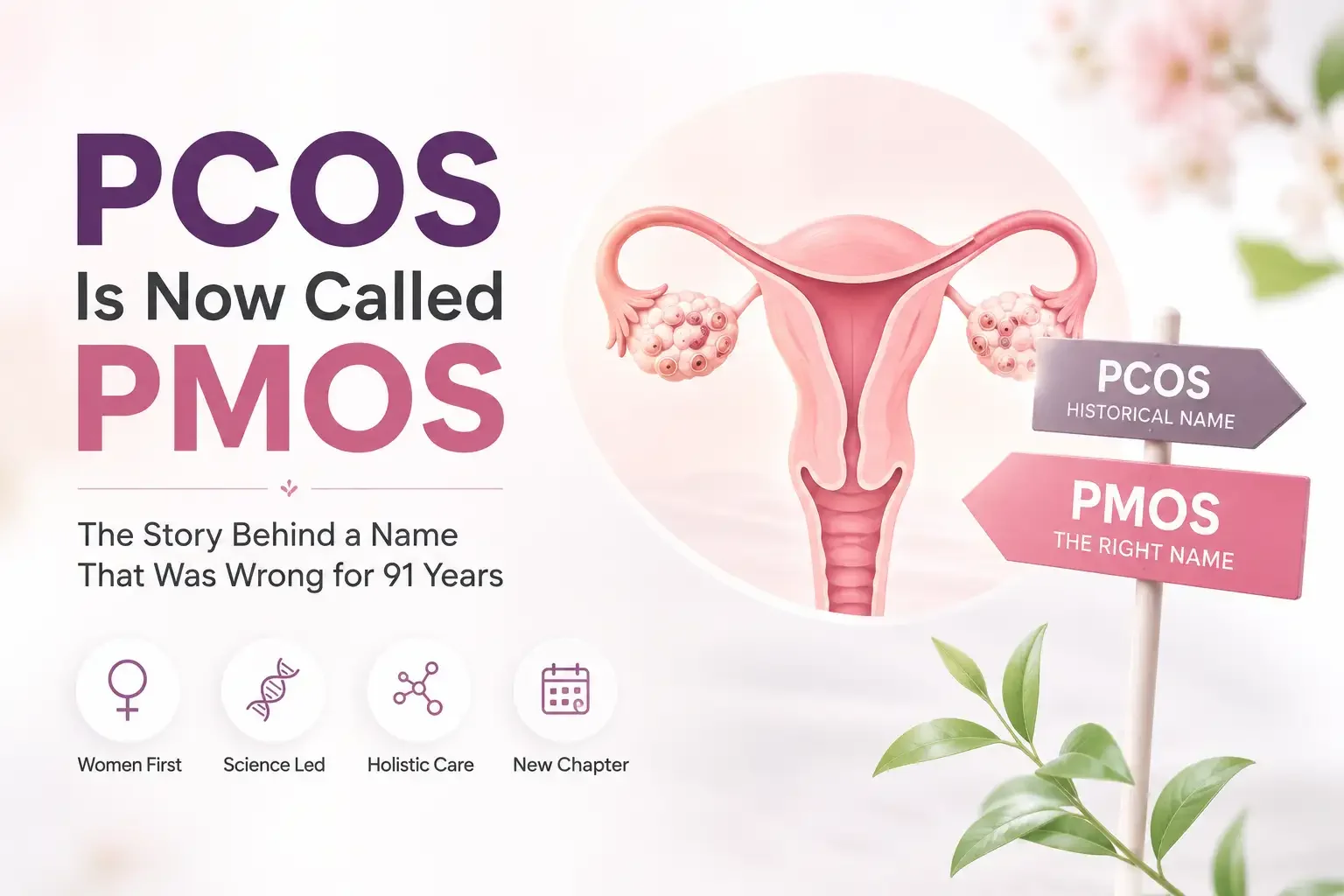
This renaming is a feminist issue. Not in the narrow, caricatured sense that the word "feminist" sometimes conjures, but in its truest meaning: the recognition that women's bodies, women's pain, and women's health have been systematically misunderstood, minimised, and misnamed by a medical system that was never fully built with them in mind. To understand why PMOS matters, and why it matters now we must examine what the old name got wrong, who paid the price for that error, and what a more honest name promises for the future.
A Name That Lied
Let's begin with the old name itself. "Polycystic ovary syndrome" PCOS, implies one primary thing: that the defining feature of the condition is the presence of cysts on the ovaries. This is medically inaccurate. What ultrasounds actually detect are not pathological cysts at all, but arrested follicles, small fluid-filled sacs that simply didn't complete ovulation. The distinction matters enormously. For decades, women arrived at their doctors' offices with a constellation of symptoms; irregular periods, insulin resistance, weight gain, excessive hair growth, acne, anxiety, depression, only to be told, after an ultrasound showed nothing alarming: "Your ovaries look fine. You don't have PCOS."

As Dr. Alla Vash-Margita, Associate Professor at Yale School of Medicine, put it plainly: "By calling this condition polycystic ovary, we're missing the big picture. There was a lot of stigma and myth related to this name. People thought they have large cysts, which they do not have."
The new name corrects this at every turn. Polyendocrine acknowledges that the condition involves multiple interacting hormonal disturbances: insulin, androgens, and neuroendocrine pathways. Metabolic recognises the condition's profound effects on weight, cardiovascular health, blood sugar, and long-term disease risk. Ovarian retains an appropriate nod to the reproductive dimension without reducing the entire condition to it. Syndrome acknowledges the reality that this is a complex, multisystem, lifelong condition, not a single-organ problem with a tidy fix.
The renaming was not done lightly. It emerged from what researchers described as an "unprecedented, rigorous, multistep global consensus process", one that spanned 11 years, incorporated responses from over 22,000 stakeholders, engaged 56 leading academic, clinical, and patient organisations, and eventually reached a near-unanimous agreement. The process deliberately prioritised "scientific accuracy, clarity, stigma avoidance, cultural appropriateness, and implementation feasibility." It is, in every sense, a name built by and for patients.
The Cost of Getting It Wrong
The old name did not just mislead, it harmed. And the harm fell almost entirely on women.
Research has shown that diagnostic delays affected up to 70% of people with the condition. In Canada, it takes an average of 4.5 years and at least four consultations with different healthcare providers before a conclusive PCOS diagnosis is reached. In Australia, the figure is even more startling: an average of five years, preceded by visits to at least three separate practitioners. These are not statistics. These are years of a woman's life spent in pain, confusion, and self-doubt, years during which the metabolic and cardiovascular consequences of the condition quietly worsen in the background.
The consequences of delayed diagnosis go far beyond inconvenience. Untreated, PMOS carries significantly elevated long-term risks: type 2 diabetes, cardiovascular disease, endometrial cancer, and severe mental health conditions including depression and anxiety. Every year of diagnostic delay is a year of preventable deterioration.
But the wrong name did not just delay diagnosis in the clinical sense, it shaped how doctors thought about the condition, and in turn, how they responded to the women who came to them for help. When a condition is defined as a "gynaecological problem," it tends to be managed by gynaecologists alone. The metabolic workup checks for insulin resistance, lipid profiles, glucose tolerance, gets pushed aside as someone else's domain. Women were referred from specialist to specialist, each seeing only their piece of the puzzle, while no one assembled the whole picture.
Medical Gaslighting: The Feminist Dimension
This is where the feminist analysis becomes not just relevant, but essential. Medical gaslighting, the dismissal or minimisation of a patient's reported symptoms by a healthcare professional, disproportionately affects women. It is not a fringe claim or an anecdotal grievance; it is a documented pattern rooted in centuries of medical history in which women's pain was attributed to hysteria, emotionality, and the inherent unreliability of the female body. The word "hysteria" itself derives from the Greek hystera, meaning uterus, a linguistic monument to medicine's long habit of treating women's suffering as originating in their reproductive anatomy rather than deserving of serious investigation.
For women with PCOS/PMOS, medical gaslighting has been a defining feature of the diagnostic journey. Women have reported being dismissed as "over-emotional," told their symptoms were "just part of being a woman," or advised simply to "lose weight" when they presented with a complex hormonal condition that standard dietary advice could not adequately address. The mismatch between the name, which pointed to ovarian cysts, and the reality which involved systemic endocrine dysfunction gave healthcare providers a convenient excuse to doubt what patients were telling them about their own bodies.

Kendall Soucie, a Canadian researcher who herself has the condition, has described how healthcare workers initially wrote off her health concerns as unreliable, attributing her distress to emotionality. She went on to make medical gaslighting in PCOS the focus of her academic research. Her story is not an outlier; it is a pattern replicated across continents, demographics, and decades.
The feminist significance of the name change, then, is this: PMOS does not allow medicine to reduce this condition to an ovarian problem. It demands that clinicians look at the whole body, the hormonal system, the metabolic system, the psychological dimension, the skin, the cardiovascular risk profile. It removes the fig leaf that allowed a doctor to say, "Your ovaries look fine," and send a suffering woman home.
Language as Power
Feminism has long understood that language is not neutral, it encodes power, shapes perception, and determines who is seen and who is overlooked. The history of women's healthcare is littered with names and frameworks that served to diminish, confuse, or contain women's experiences within culturally acceptable narratives.
The naming of PCOS as a primarily "ovarian" condition did exactly this. It funnelled a complex endocrine disorder through the lens of female reproductive anatomy, the part of women's bodies that medicine has always been most obsessed with, and the part most heavily burdened by social expectation and stigma. When a woman's primary symptom is "a problem with her ovaries," she is automatically slotted into narratives about fertility, femininity, and the expectation that reproductive capacity is the central axis of a woman's health.
This had real consequences for research funding, clinical attention, and public awareness. Because PCOS was framed as a reproductive condition, its metabolic and cardiovascular dimensions were chronically underfunded and under-researched. Women were prescribed the pill, a band-aid that regulated periods without addressing underlying insulin resistance and sent away as "treated." The condition's long-term risks were rarely discussed, because it was not seen as a long-term metabolic condition; it was seen as a gynaecological inconvenience.
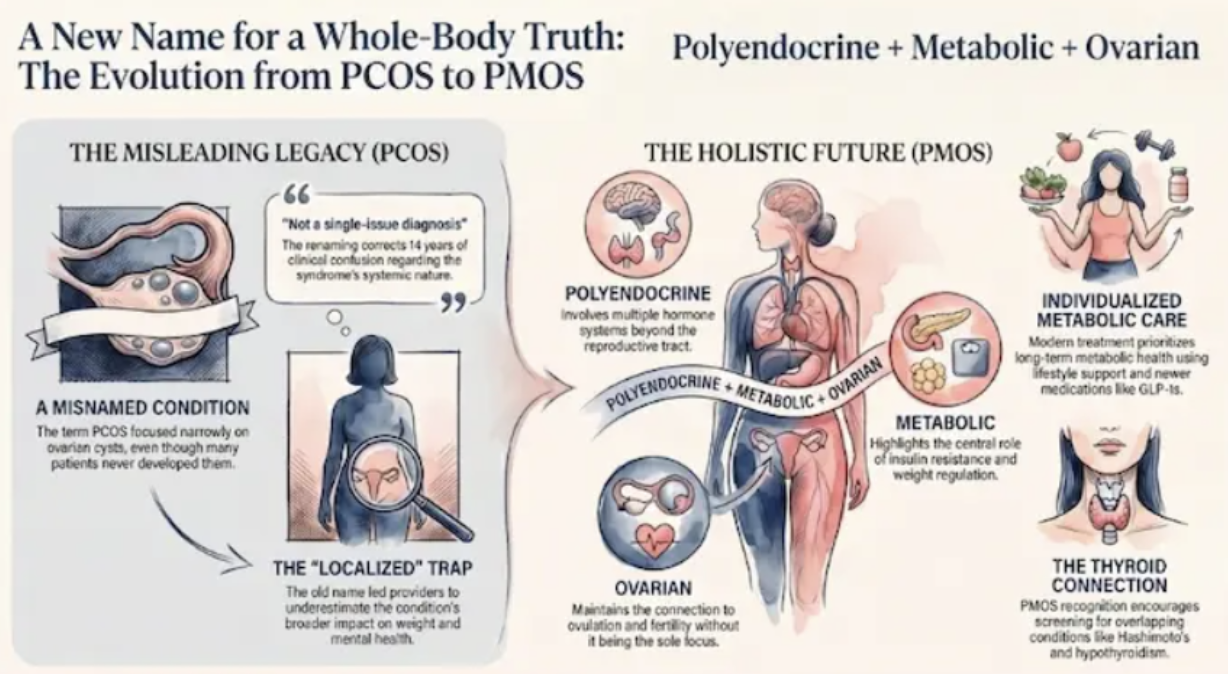
The new name, PMOS, breaks this frame. By foregrounding the words "polyendocrine" and "metabolic," it signals to every clinician, researcher, and health system that this is a condition of hormonal and metabolic complexity, deserving of the same rigour and comprehensive care as diabetes, cardiovascular disease, or thyroid disorders. It is no longer a women's niche problem; it is a serious, systemic condition that happens to be centred in women's bodies.
Patient Advocacy and the Power of the Collective
The renaming did not happen because a committee of clinicians decided it was time. It happened because patients, overwhelmingly women, advocated for it, persistently and loudly, over more than a decade.
The process that led to PMOS was initiated and repeatedly revitalised by the voices of people living with the condition. Surveys administered in 2017, 2023, and 2025 gathered responses from nearly 15,000 stakeholders, with patients forming a central part of every consultation. Patient advocates sat on the global panel alongside researchers and clinicians. Organisations like Verity, the UK-based charity for people with PCOS, were integral to the process, with their chair of trustees, Rachel Morman, serving as a lived experience expert throughout.
Lorna Berry, an Australian woman with PMOS who played a key role in the renaming, captured the stakes with clarity: "This is about accountability and progress. It is about my daughters, their daughters, and the countless women yet to be born. We deserve clarity, understanding, and equitable healthcare from the very beginning."
This is feminist health activism in action. It is women refusing to accept a name that distorted their reality, organising across borders and disciplines, and demanding that the medical establishment catch up with their lived experience. It took 11 years. It required 22,000 voices. But it happened, and it sets a precedent for how women's health conditions should be named, researched, and understood going forward.
The Road Ahead: What PMOS Must Still Reckon With
The name change is a victory, but it is not a conclusion. There are limitations to acknowledge, and challenges that still demand feminist attention.
The global consensus process, despite its scale, faced criticism for lower participation from low- and middle-income countries, a gap that reflects the structural inequalities of global medicine, where women in the Global South are least likely to have their voices centred in the research and policy conversations that shape their healthcare. The new name was also selected in part to avoid terminology that could "heighten stigma and be harmful for women in some countries", a recognition that for women in many parts of the world, a diagnosis tied to reproductive function carries specific social and cultural dangers that women in wealthier, more secular contexts may not face.
There is also the question of whether renaming alone is sufficient without the systemic changes that must accompany it. A three-year transition plan is in place, with updates to clinical guidelines in 195 countries, integration into electronic health records, and multilingual educational materials. But guidelines do not automatically change the attitudes of individual clinicians who still reach for the prescription pad rather than the comprehensive metabolic workup.
For the name change to mean what its advocates intend it to mean, it must be accompanied by a cultural shift in medicine: one that takes women's reported symptoms seriously, invests in research that goes beyond the reproductive frame, trains clinicians to see the whole patient rather than just her ovaries, and actively works to dismantle the patterns of medical gaslighting that have defined so many women's diagnostic journeys.
Conclusion: More Than Semantics
When Rachel Morman of Verity described the old name as one that "misrepresented the true nature of this condition," she was describing something more than a scientific inaccuracy. She was describing a failure of care, a systemic pattern by which women's bodies were reduced to their most visible, most socially freighted parts, and their full complexity was ignored.
PMOS is correct. It is science catching up to lived experience. It is medicine acknowledging, however belatedly, that a woman is more than her reproductive system, that her insulin, her cortisol, her cardiovascular risk, and her mental health are all part of the same story, and all deserve the same attention.
The feminist significance of this name change is not symbolic. It is material. It will shape how quickly women receive a diagnosis, how comprehensively they are treated, how seriously their symptoms are taken, and how much research is devoted to understanding their long-term health. It is the difference between being told "your ovaries are fine" and being seen, whole, in all your complexity.
Language matters in medicine, as Dr. Melanie Cree of the University of Colorado put it. But language only matters if we make it matter, by demanding accuracy, insisting on comprehensive care, and refusing to let the names we give to women's conditions define the limits of the care they receive.
PMOS is a beginning. The fight it represents is far from over.
Reportings from The Lancet, STAT News, CNN Health, the Endocrine Society, and the Yale School of Medicine.
By Karishma Singh - LinkedIn Id
